
What is the anti-ui-slop skill?
The anti-ui-slop skill is a SKILL.md folder from UIZZE, hosted in the awesome-copilot repository. It tells an AI coding agent to read your brief, components and tokens first, load one playbook for the task, optionally pull references from 800,000+ real screens, and finish by rendering and fixing visible breakage.
The anti-ui-slop skill is a folder in GitHub's awesome-copilot collection, authored by UIZZE. Its SKILL.md is short and acts as a router. It sets the order of work and points to playbook files for each kind of task.
The core idea is that the product outranks the skill. The agent reads the brief, existing UI, components, tokens and constraints before designing, and keeps familiar interaction conventions instead of adding novelty for its own sake.
What changes in your agent's output
- The build extends your existing components, design tokens and visual language instead of inventing a new system.
- One playbook is loaded per request, chosen from new work, operate, polish, distill, audit or iOS. A second playbook is never loaded.
- When the environment supports it, the agent renders the result once, inspects it, and fixes clipping, overlap, distorted media, inaccessible controls or inert interactions.
- The handoff stays concise.
The six playbooks
reference/new-work.mdfor a new interface or a major redesign.reference/operate.mdfor product or dashboard work.reference/polish.mdfor refinement, andreference/distill.mdfor simplification.reference/audit.mdfor an explicit audit, Related: impeccable-audit.reference/ios.mdfor native iOS work.
Optional UIZZE references
The skill is free and needs no account, token, dependency or script. A separate paid UIZZE MCP exposes find_ui_references and find_ui_materials. The agent uses them only for a concrete unresolved visual question, and carries on silently if they return nothing.
Who the anti-ui-slop skill is for
Best for
- Web or iOS interfaces where an existing design system and components must be respected.
- Designing, redesigning, critiquing or a pre-ship review of one screen or component.
- Teams that run Codex, Cursor or GitHub Copilot and want one shared set of ground rules.
Not for
- Projects with no brief, components or tokens to work from, since the skill leans on them.
- Targets other than web and iOS. Related: frontend-design.
- Getting references without the paid MCP. The reference lookup lives there.
Use it with UiChemy
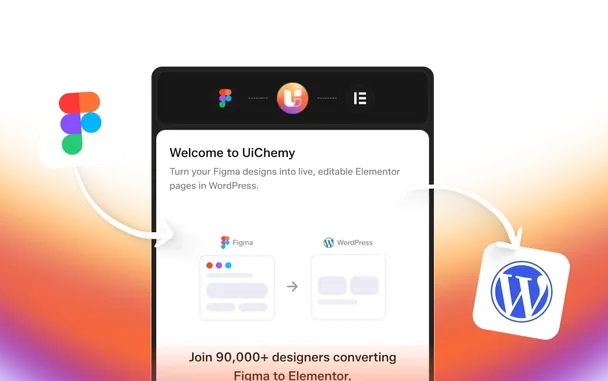
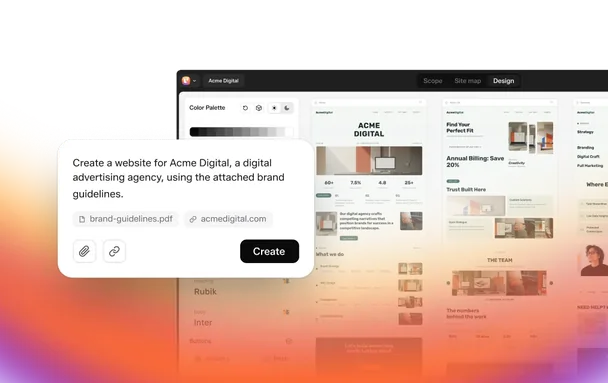
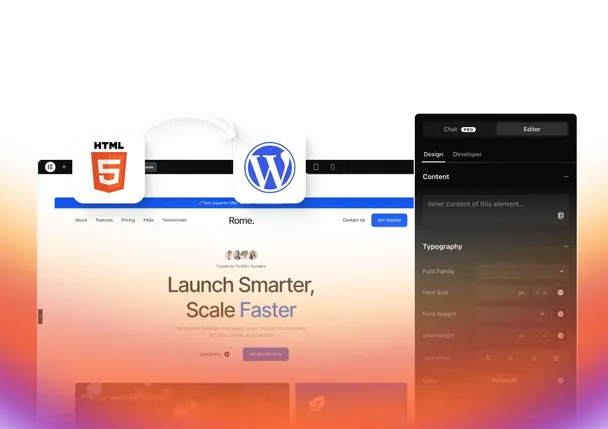
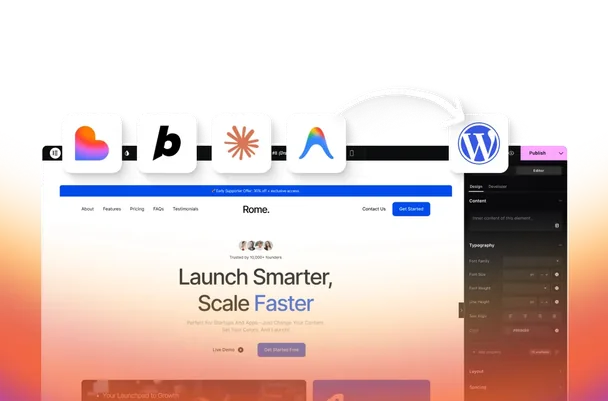
The skill produces web or iOS UI in code, so it stops before WordPress. To carry a web build onto a WordPress site, UiChemy AI to WordPress imports an AI build, and Composer edits it in Elementor or Gutenberg. Click Get Started on uichemy.com.
How to install Anti UI Slop Skill: Ground AI Interfaces in Real Screens
git clone https://github.com/github/awesome-copilot.gitClone the repository
Run
git clone https://github.com/github/awesome-copilot.git. The skill sits in the skills/anti-ui-slop folder.Copy the whole folder
Copy skills/anti-ui-slop into the place your agent loads skills from. Keep SKILL.md together with its reference and references folders, since SKILL.md points to them.
Check agent abilities
The skill works in any agent that can read project files and fetch a URL. The optional MCP is not needed for the free skill.
Trigger it
Ask with one of the listed phrases: anti-ui-slop, stop UI slop, ground this UI in real screens, or run the UI finish gate.
Check that it loaded
Ask your agent to run the UI finish gate on one screen. It should read your brief and components, load a single playbook, and report after rendering and inspecting the result.
Key features
- Product firstThe brief, existing UI, components, tokens and constraints are read before any design, and they outrank the skill's own guidance.
- Design contractThe skill description lists defining a design contract for the interface as part of the job, before the build starts.
- Required statesCovering the required states is part of the stated scope, so the screen is not just the happy path.
- One playbook per requestThe agent picks at most one playbook file for the task and applies judgment instead of treating its examples as a checklist.
- Native iOS playbookA separate ios.md playbook handles native iOS work, so web conventions are not forced onto an iPhone screen.
- Explicit audit modeAn audit.md playbook is loaded when you ask for an audit, rather than mixing review into a build pass.
- Optional reference toolsfind_ui_references and find_ui_materials come from the paid MCP and are used only when a concrete visual or material question is unresolved.
- Finish passThe agent completes the scope, renders and inspects once where it can, and fixes observable breakage. See also polish.
- No dependenciesThe free skill works without an account, token, MCP connection, dependency, script or executable.
Frequently asked questions
What is the anti-ui-slop skill?
It is a skill from UIZZE inside the awesome-copilot repository. It tells an AI coding agent to build product-specific web and iOS interfaces from your brief and design system, load one playbook per task, and finish with a render, inspect and fix pass before it hands work back.
How do I install the anti-ui-slop skill?
Clone github/awesome-copilot and copy the skills/anti-ui-slop folder into the folder your agent loads skills from. Keep the playbook folders with SKILL.md. Then ask for it by name, for example with the phrase stop UI slop, and name the screen you want built or reviewed.
Does anti-ui-slop need the UIZZE MCP?
No. The skill states that the free skill and public catalogue work without an account, token, MCP connection, dependency, script or executable. The paid MCP is optional and adds find_ui_references and find_ui_materials for concrete visual or material questions.
Which AI coding agents can use anti-ui-slop?
Its metadata says it is designed for Claude Code, Codex, Cursor and GitHub Copilot, and that it works in any agent that can read project files and fetch a URL. Folder locations differ per agent, so copy it where your agent expects skills.
What does the anti-ui-slop finish gate do?
Per SKILL.md, the agent completes the requested scope, then renders and inspects once when the environment allows. It fixes observable breakage such as clipping, overlap, distorted media, inaccessible controls or inert interactions, and keeps the final handoff concise.
What are the anti-ui-slop playbooks?
There are six: new-work for new interfaces, operate for product and dashboard work, polish for refinement, distill for simplification, audit for explicit audits and ios for native iOS. The agent loads at most one of them per request and never a second.
What license does anti-ui-slop use?
The SKILL.md metadata lists MIT, and the awesome-copilot repository also reports MIT. The skill folder also includes its own LICENSE and NOTICE files, so you can read the exact terms before reusing it. Related: web-design-guidelines.