The AI-First Visual Editor
Built For
WordPress.
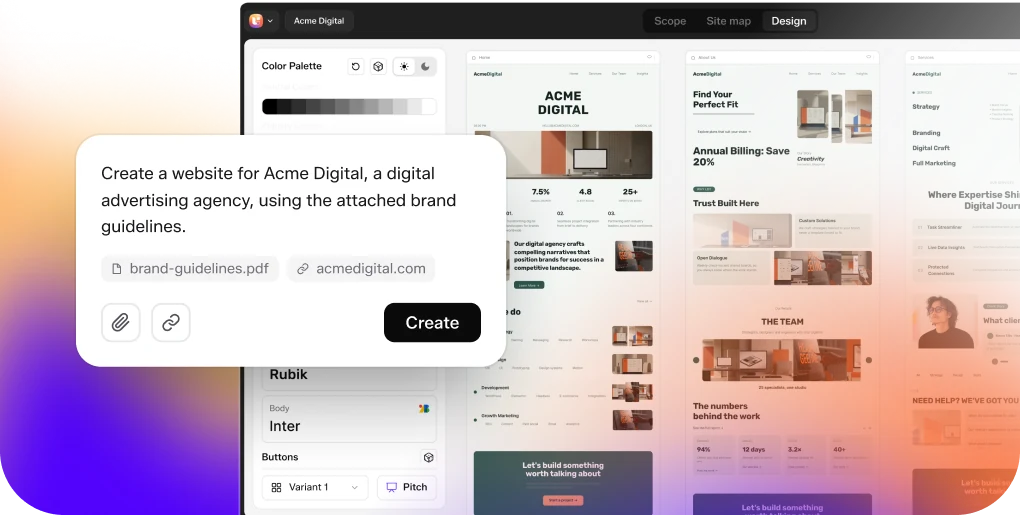
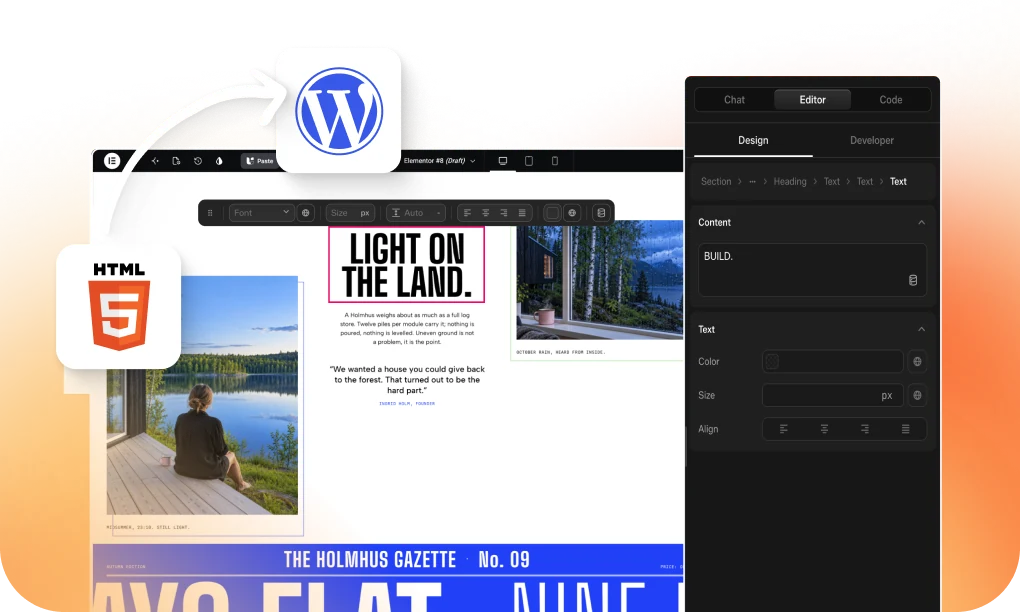
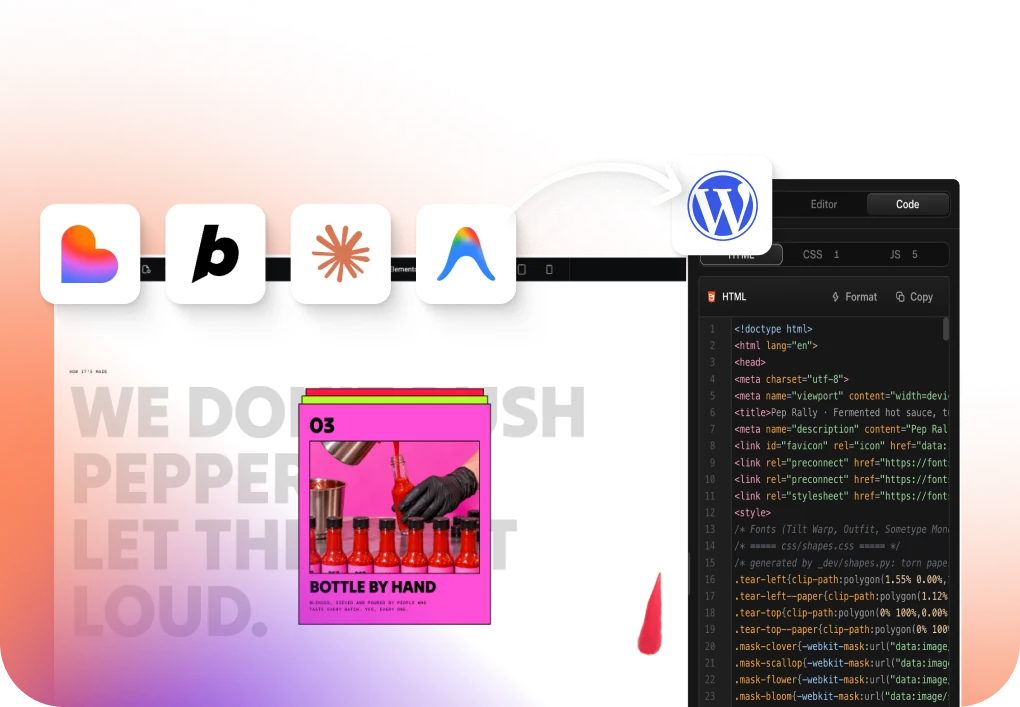
UiChemy Composer is a new kind of WordPress builder. Describe the page you want and it writes real HTML, CSS and JS, then hands you a visual editor to change every line of it. No widget schema, no frozen markup, no export you can never touch again.
Why a new editor
Every builder ships a page.
Almost none ship one you can still change
WordPress can generate a page in seconds now. Six weeks later the client wants one heading changed, and you're re-prompting the whole layout, because nothing in that file has a name. Composer was built for the part that comes after.
Frozen markup
It looks right. Then you move one section and the whole layout shifts.
Fresh bread, baked
every morning.
A neighborhood bakery, open seven days a week.
Layout shifted
6 elements moved with it
The re-prompt loop
Changing one line means restating the entire page and hoping.
Make the hero heading smaller
Rebuilt the page: 38 blocks
Same page. Just the heading.
Rebuilt the page: 38 blocks
Only the heading. Don't touch the layout.
Rebuilt the page: 38 blocks
Only. The. Heading.
Same change, fourth try
Whole page rewritten each time
Nobody can maintain it
Unnamed divs, inline styles, no system. Your team can't open it. Your client certainly can't.
No named classes
Nothing here to search for
One Widget. Real Code. Edited Live.
Add the Composer widget once. From then on, AI builds sections as genuine, editable code, and you change any line by hand or by prompt.
Install The UiChemy Plugin
Add UiChemy to your WordPress site and activate it.
Add The Composer Widget
Drop the Composer widget into your page, once.
Connect Claude From Your Terminal
Run one command to link Claude to your site.
Describe And Build
Ask in the Composer chat. It builds the section as real code, right inside your builder.
Install The UiChemy Plugin
Add UiChemy to your WordPress site and activate it.
Add The Composer Widget
Drop the Composer widget into your page, once.
Connect Claude From Your Terminal
Run one command to link Claude to your site.
Describe And Build
Ask in the Composer chat. It builds the section as real code, right inside your builder.
Real class system
Changes stay consistent across the whole site.
Global colors & variables
Simple globals, changed once.
Layers & assets manager
Everything organized, like a proper editor.
Featherlight output
Only the code you build ever ships.
Code underneath. A visual editor on top.
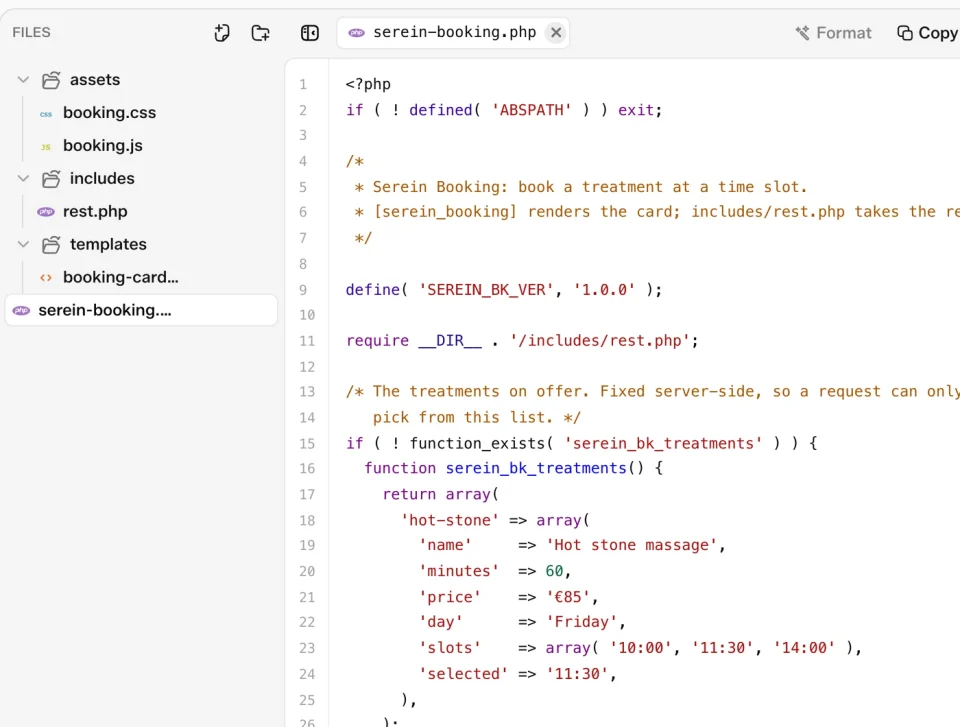
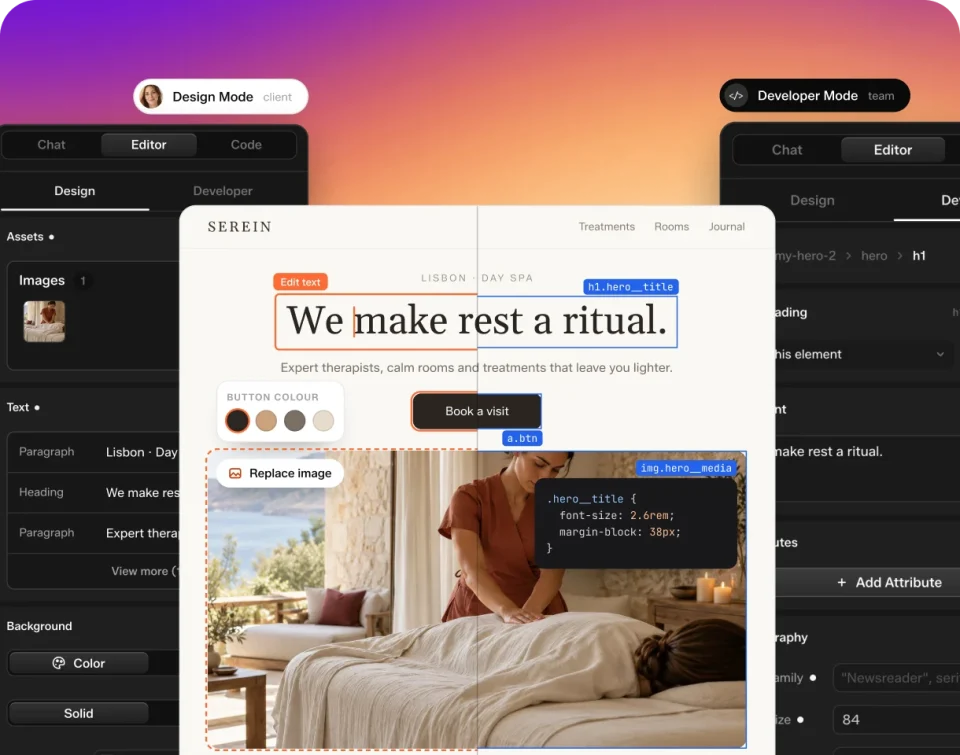
Every other builder stores your page as a PHP widget schema, a format no AI was trained on and no developer can read. Composer builds in HTML, CSS and JS instead, and puts the visual editing layer over that. Which is why the same section opens two different ways, depending on who's in it.

Design Mode
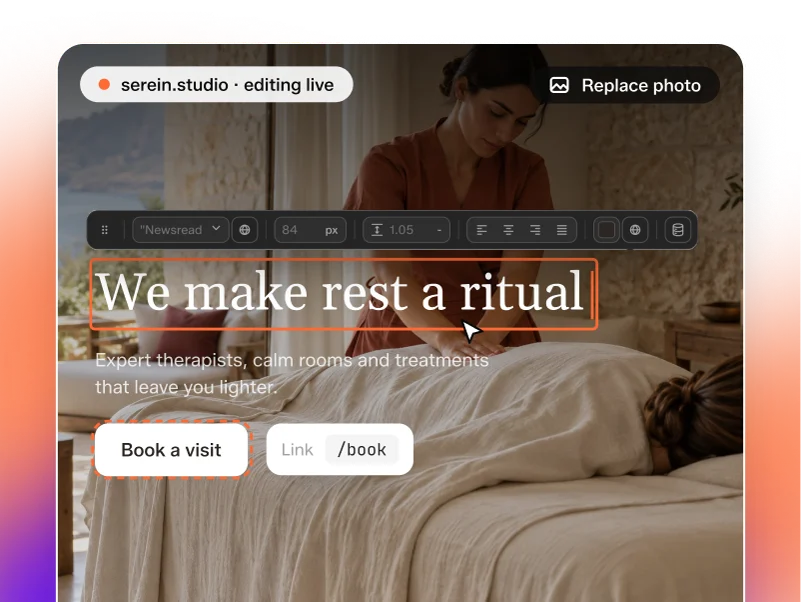
Text, images, links, colors, spacing. On the page, where you can see them. No code on screen, nothing to break. This is what you hand the client.

Developer Mode
The class editor, the code for this section, this page and the whole site, the layers panel, and the global variables. The same file, opened by someone who wants it.
AI, on your terms
Use your own AI. Or don't use AI at all.
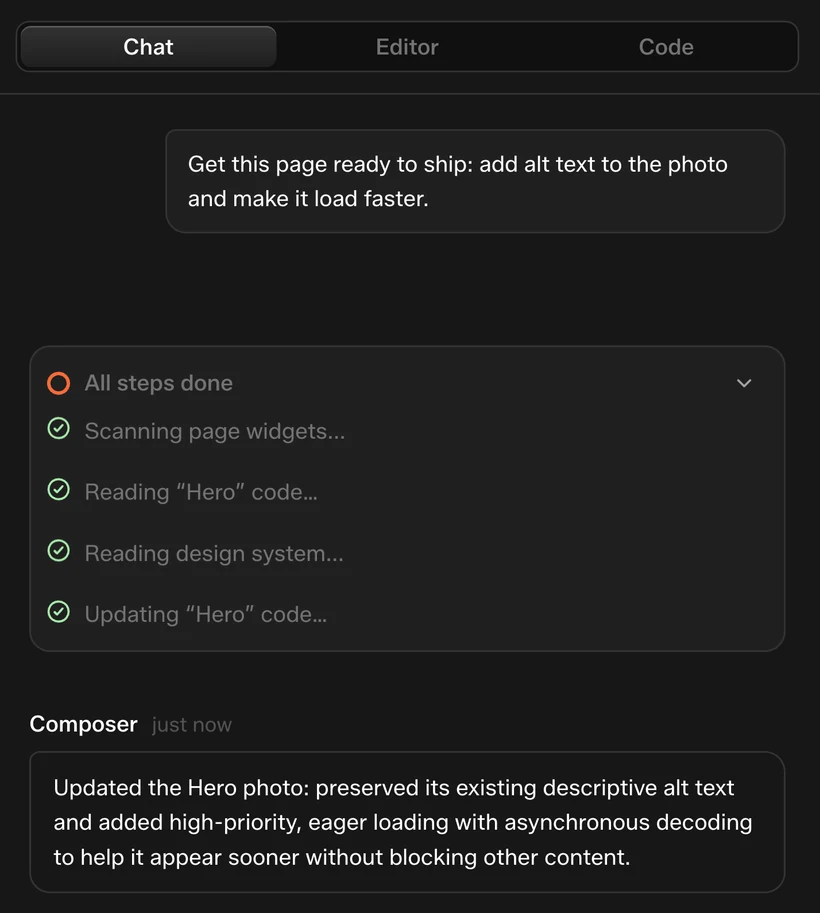
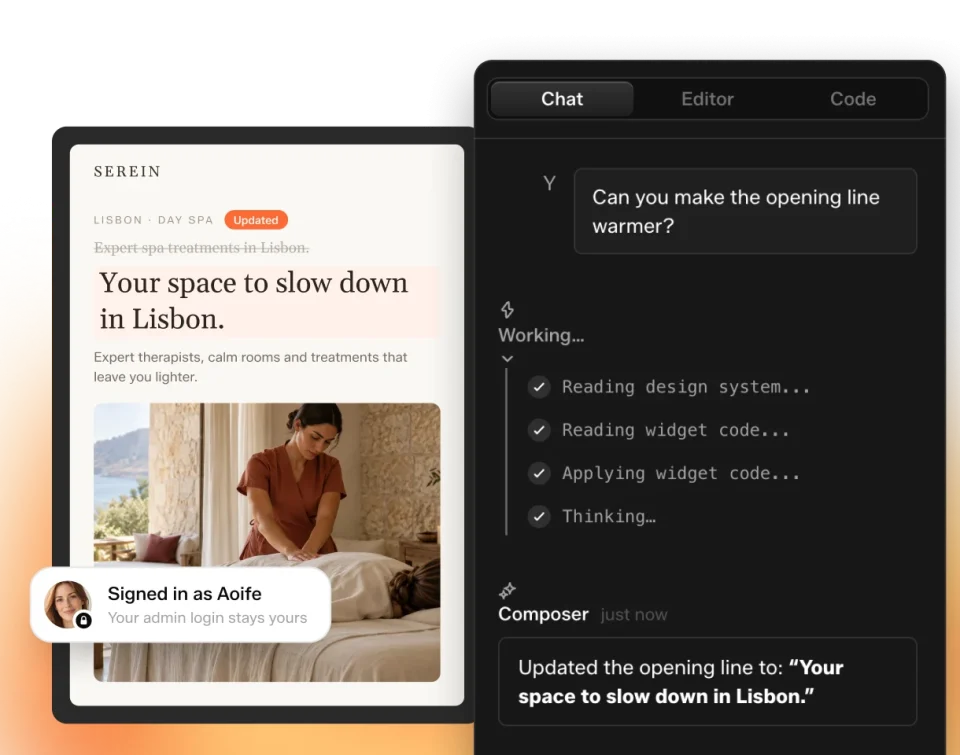
Chat on the canvas with the full page and site in context. Connect the Claude subscription you already pay for through the CLI, or drop in your own API key. Or ignore all of it and build by hand. Composer is a visual editor first, and it works with the AI switched off.
Chat on the canvas
Prompt a new layout, change an existing one, or make a static page dynamic.


Draw and comment
Circle the thing on the page, write what’s wrong, and it changes.

Your subscription or your key
Connect your own agent through the CLI, or use an Anthropic, OpenAI or Google key.
3 skills, 100+ actions
How to build a site, how to build a store, and the actions an agent needs to actually do it.


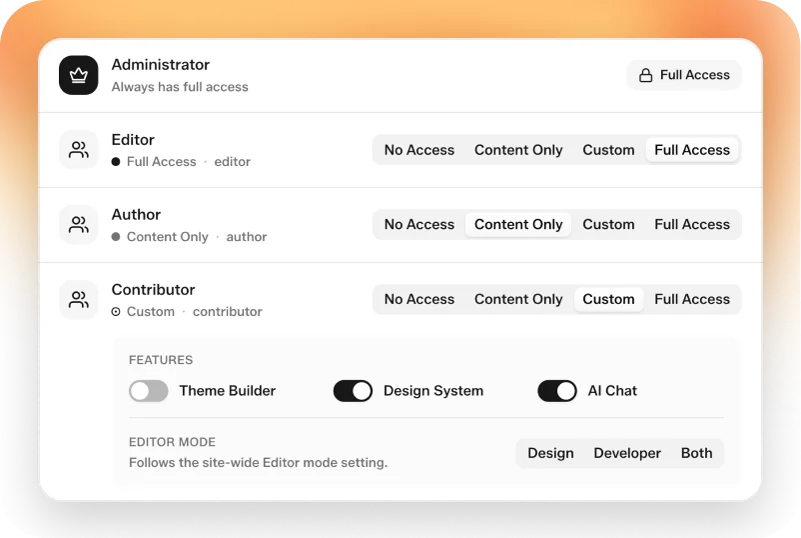
Role manager
The role manager decides what each user role can even see. Give a client Design Mode on the front end and nothing else.
Theme builder
Header, footer, archive, single, product, search and 404. A full theme builder, built in, with no Pro add-on to buy.
Dynamic content
Every WordPress field, plus ACF, JetEngine and Metabox. Visual query builder and loop builder.
Forms
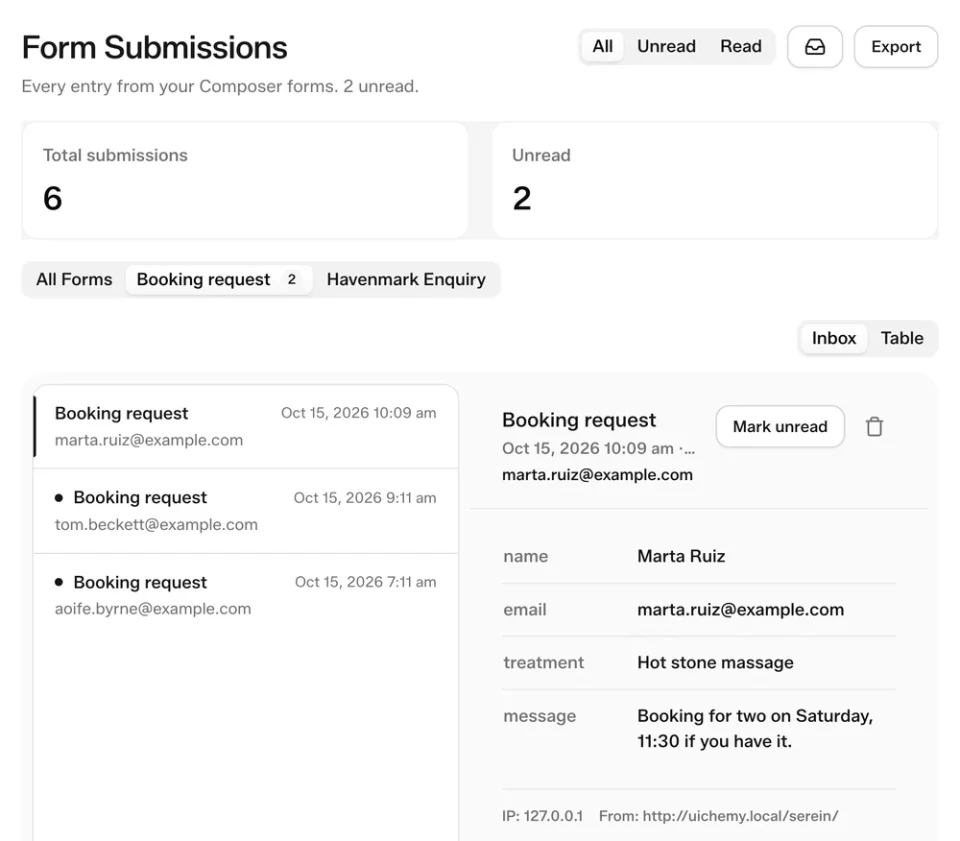
Describe the form, get a working one. Any element can become a field. Submissions land in your dashboard.
WooCommerce
Products, variations, pricing, stock, gateways, shipping. One prompt to a store that can take an order.
Feature directory
Eight categories. One canvas.
Everything Composer does, grouped. Every card opens the matching section of the features page.
The canvas
Front-end and back-end editing, Design and Developer modes, layers, history, GSAP and WebGL.Read moreAI & agents
Chat on the canvas, draw-and-comment, your own CLI or API key, 3 skills and 100+ actions.Read moreDesign system & brand
Global colors, classes and variables. Import a brand, export it to the next project.Read moreDynamic content & data
Every WordPress field plus ACF, JetEngine and Metabox. Query builder, loops, theme builder, WooCommerce.Read moreForms
Describe it and it's built. Any element becomes a field. Submissions in your dashboard.Read moreAnywhere in WordPress
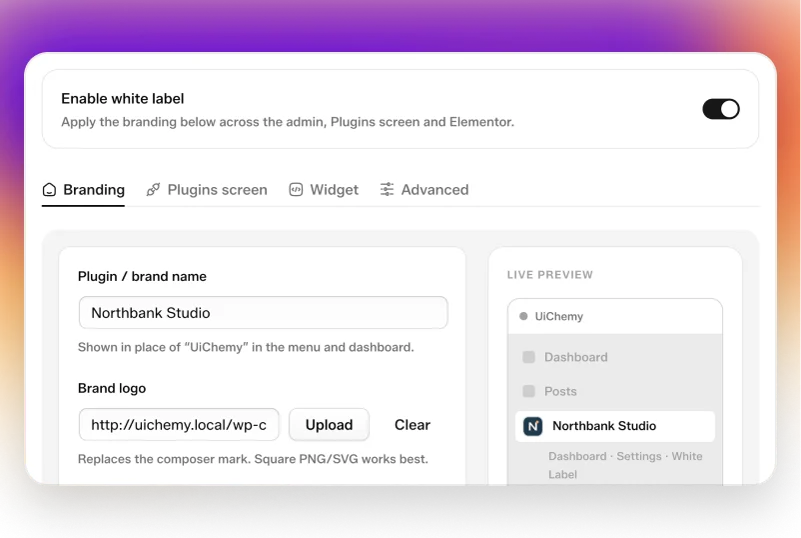
Composer sections render natively in Elementor and Gutenberg today. Bricks and Divi coming.Read moreAgency & delivery
Role manager, front-end-only handover, white label.Read morePerformance & ownership
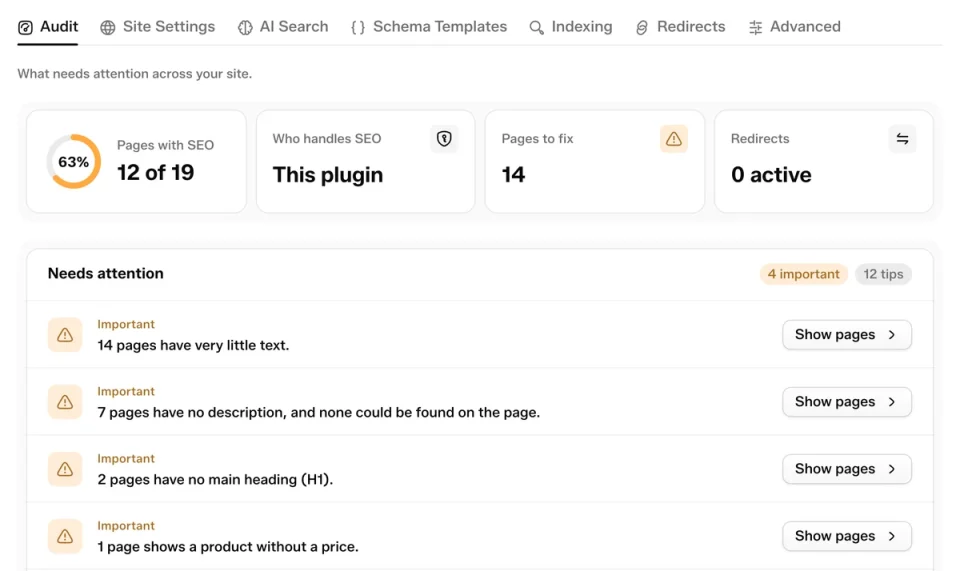
Global, page and section code splitting. Real code, in your own database.Read moreIt’s just code. That’s why it’s fast, and why it’s yours
Code is split three ways (global, page and section), so a page loads its own CSS and JS and nothing else’s. In our own testing that lands 90+ on Google PageSpeed. And because the output is real HTML, CSS and JS sitting in your database on your hosting, you can open it, read it and take it with you.
Readable code, your database, your hosting, and a license that can lapse without taking the site down.
From the community
See The Real Pages Designers Ship With UiChemy
Real pages, real reviews, and the Figma files behind them. See how designers moved their work into WordPress, in their words.
FAQ
Frequently Asked Questions.
An AI-first visual editor for WordPress. You describe a page, Composer writes real HTML, CSS, and JS, and you edit it on the page: visually in Design Mode, or in the code itself in Developer Mode.
Page builders store your page as a widget schema, so what you build only exists inside that builder. Composer builds in HTML, CSS, and JS and puts the visual editor on top, so the output is code first and a canvas second.
Yes. Everything Composer generates is raw HTML, CSS, and JS that lives in your own database, on your own hosting. Nothing is locked to our service.
Real, structured, editable code, not a baked screenshot. Move any section and the layout holds.
No. Design Mode is text, images, links, colors, and spacing in plain fields on the page. Developer Mode is there when you want the code.
Install UiChemy Composer, open a page, and describe what you want. It writes clean code you keep, and you edit it from there.
No. Composer works on the site you already run. Build one new section with it, or a whole page, and leave the rest alone.
OpenAI, Anthropic, or Google via the WordPress AI Client, or your own CLI agent.
Yes. Bring your own key, or connect your own AI agent. Chat works with either.
Yes. Composer is a visual editor first. Every mode, panel, and control works with the AI switched off.
Yes, free at launch. The Free plan includes the full canvas, Design and Developer modes, and AI Chat with your own key or agent.
Yes, pay the difference anytime.
The plugin keeps working and your site keeps running. Updates and support pause until you renew.
No, staging and local sites do not count.
Yes, a 14-day money-back guarantee on every paid plan.
Elementor and Gutenberg today, rendered natively in each. Bricks and Divi are coming.
Yes. The same Composer section renders in each builder, so your content moves with you as new builders go live.
That’s where it’s heading. Today Composer runs alongside the builder you already have, so nothing on your site has to move for you to start.