

The short answer
Shopify vs WooCommerce is a choice between a managed store and one you run yourself. Pick Shopify for a hosted platform with plans, built-in support and a checkout handled for you. Pick WooCommerce to own your site, code and data on WordPress, and avoid a monthly platform fee.
Pick Shopify when you want one vendor to run the store, with plans, support and checkout included, and you accept the platform fee. Pick WooCommerce when you want to own the code and data on WordPress and are ready to look after hosting and extensions. Decide who maintains the site before you compare prices.
Which one for your situation
Shopify vs WooCommerce: side by side
| Feature | Shopify | WooCommerce |
|---|---|---|
| What it is | Hosted commerce platform | Store platform built on WordPress |
| How you pay | Monthly plans: Basic, Grow, Advanced, Plus | No monthly platform fee stated |
| Hosting | Run by Shopify | You choose WordPress hosting |
| Extensions | Apps and built-in tools | Over 1,000 in the WooCommerce Marketplace |
| Staff accounts | None, 5, 15 or unlimited by plan | Set up through WordPress users |
| Third-party payment fee | 2%, 1%, 0.6% or 0.2% by plan | Depends on the payment provider you add |
| In-person selling | POS Pro add-on per location | Connect an existing POS |
| Subscriptions | Not on the plan comparison | WooCommerce Subscriptions |
| Code and data | Kept on Shopify's platform | Fully yours, on your own site |
| Upkeep | Handled by the vendor | Updates, backups and security are yours |
Choose by tool
Choose Shopify if
- You want a managed store and a vendor to call when something breaks.
- You plan to hire staff and want accounts included in the plan.
- You want a checkout that is already built, with a customizable version on Plus.
- You sell in person and want POS from the same vendor.
- You prefer one predictable plan over assembling hosting and extensions.
Choose WooCommerce if
- You want to own the code, data and design of the store.
- You already use WordPress and want products next to your content.
- You want to pick your own host and payment providers.
- You need subscriptions or wholesale pricing from the marketplace.
- You are comfortable running updates, backups and security.

Where UiChemy fits
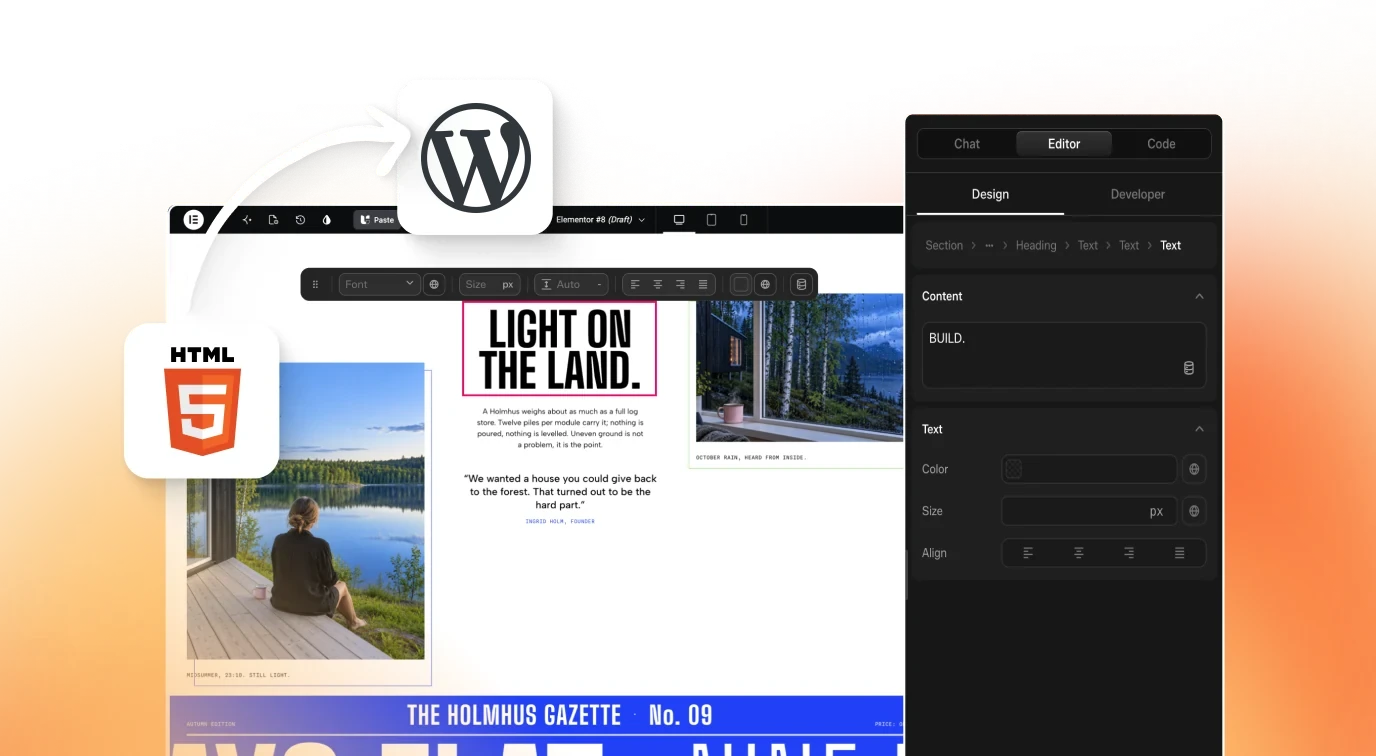
If you pick WooCommerce, you are on WordPress, which is where UiChemy works. Composer writes plain HTML, CSS and JS for your pages, and Figma to WordPress converts a design into editable pages. UiChemy handles the pages, not the store engine, so products and checkout stay with WooCommerce. See an ecommerce store from a prompt.
Frequently asked questions
Shopify vs WooCommerce: which is better for a small business?
It depends on who will run the store. Shopify suits an owner who wants a hosted platform with support and no server tasks. WooCommerce suits someone who wants control, lives on WordPress already and does not mind handling hosting and updates. Compare the total cost, not only the plan price.
Is WooCommerce cheaper than Shopify?
WooCommerce says you can sell without monthly platform fees, but you still pay for hosting, a domain, any paid extensions and payment processing. Shopify bundles hosting into its plans and lists third-party payment fees by plan. Add up a year of real costs for your store before deciding.
Is WooCommerce free?
WooCommerce offers a free download and describes itself as an open source platform. You still need WordPress hosting. WordPress itself recommends PHP 8.3 or later with MariaDB 10.11 or MySQL 8.4 or later. Paid extensions and payment processing fees are separate costs.
Can I move from Shopify to WooCommerce?
Yes, but it is a rebuild of the storefront rather than a file copy, because the two run on different platforms. Plan to move products, customers and pages, and test checkout before switching your domain. For the page side, see rebuilding a site in WordPress.
Which is better for SEO, Shopify or WooCommerce?
Neither guarantees rankings. WooCommerce runs on WordPress, so you add SEO tooling with plugins and control your own pages. Shopify lists built-in tools inside its plans. Content quality, page speed and links decide most results, so choose the editor your team will keep updating.
Which has more apps and extensions?
WooCommerce cites over 1,000 extensions in its own marketplace, on top of the wider WordPress plugin ecosystem. Shopify lists built-in features by plan and sells add-ons such as POS Pro. Count only the extensions you would actually use, and check what each one costs.
Do I need WordPress experience for WooCommerce?
Some. WordPress says beginners can use it right after installation, and WooCommerce runs inside it. Hosting, updates and backups are your job, though. If you want a visual builder for pages around the store, see AI website builders for WordPress.