
What is the Impeccable layout skill?
Impeccable layout is the /impeccable layout command in pbakaus/impeccable. It makes the agent answer seven structure questions starting with the squint test, write a spatial thesis, then fix grouping, rhythm, hierarchy and responsive behavior inside your existing visual style, and verify with a layout scan.
Layout is one of 24 commands inside Impeccable, a design skill for AI coding agents. You run it as /impeccable layout with an optional target. It loads reference/layout.md, which opens with a rule: diagnose the structural problem before moving boxes.
The command turns product priority into reading order, grouping, rhythm and usable space. It changes structure inside your established look. Replacing the look itself belongs to a different step.
What changes in your agent's output
- The primary element, the secondary element and the major groups are identifiable in order when the page is blurred.
- Related items sit close together and groups are separated, so fewer boxes and borders are needed to explain structure.
- Spacing comes from a documented scale and creates a rhythm of tight and generous intervals, not one value repeated.
- Responsive behavior reorders, collapses or reflows by priority, and focus order still matches the visual order.
- Long content, empty states, overlays and small touch targets stop breaking the structure.
How layout works, in order
- Run a layout assessment of representative states and viewports, answering seven questions with evidence.
- Run a mechanical scan with
impeccable detect --json --scope layout. - Name the spatial thesis: reading path, groupings, lead and support, density, adaptation.
- Apply the changes, verify against a checklist and rerun the scan.
- Hand off to
/impeccable polishwhen the structure holds. If type is the problem rather than spacing, run/impeccable typesetfirst.
Who Impeccable layout is for
Best for
- Screens where everything has equal weight and nothing leads.
- Pages built from a framework default: identical cards, equal columns, one spacing value everywhere.
- Responsive breakage where content shrinks instead of reorganizing.
- Dashboards and docs that need stable density, and campaign pages that can earn asymmetry.
Not for
- Changing colors, fonts or brand look. Those belong to other commands.
- Replacing the visual identity. Layout changes structure inside the existing world.
- Delivering WordPress output. It edits front-end code in your project.
Use it with UiChemy
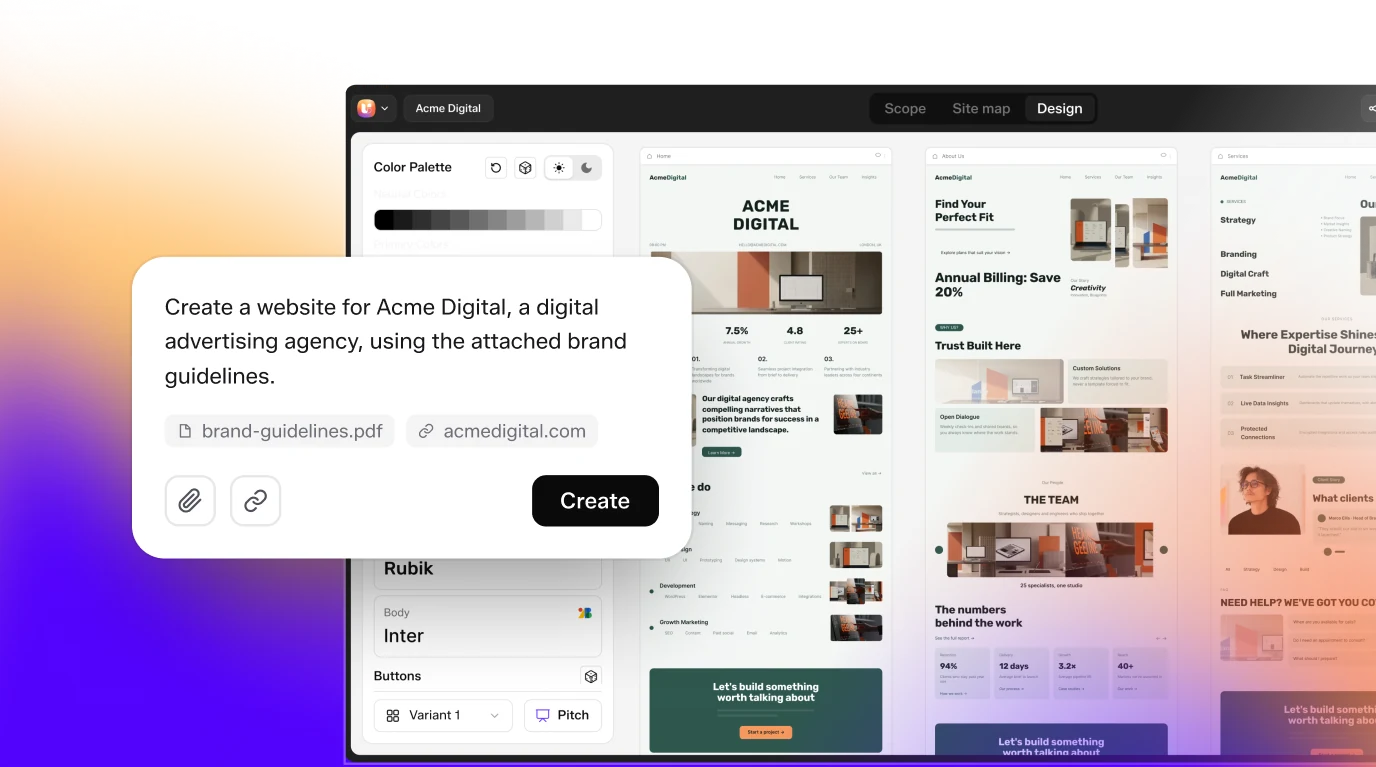
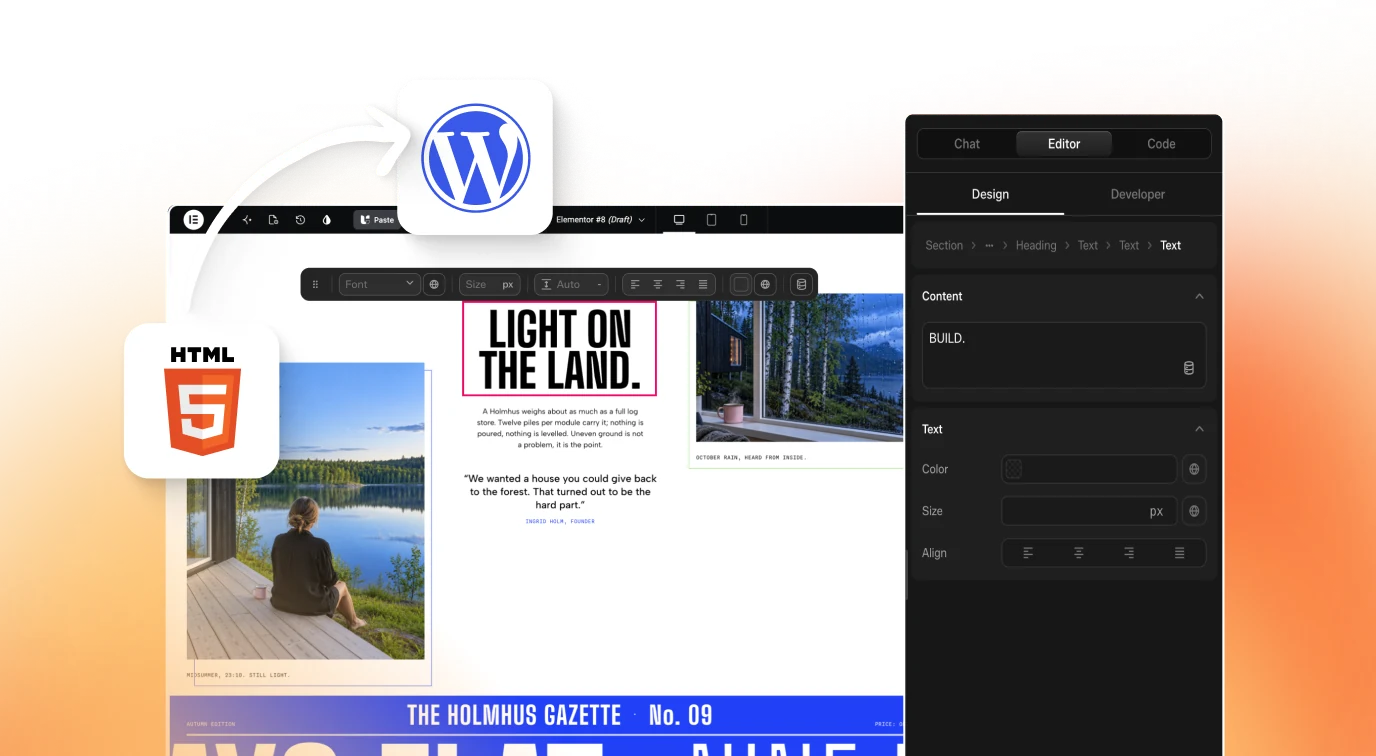
Layout fixes the structure of the build. When the page has to become editable in WordPress, UiChemy AI to WordPress imports an existing AI build, so the spacing and grouping you fixed carry into an editable page. Click Get Started on uichemy.com.
How to install Layout
npx impeccable install/plugin marketplace add pbakaus/impeccable. Update later with npx impeccable update.Run the installer from your project root
Run
npx impeccable install. It lists the agent folders it detects, such as~/.claude,~/.codexor a project-local.cursor, lets you keep or change the set, then asks whether to install for this project or globally.Skip the prompts in scripts
Pass
--providers=claude,codex,cursorand--scope=project(orglobal) to choose without questions. On Claude Code, Cursor, Codex, GitHub Copilot and Grok Build the installer also writes the provider-native design hook for the current project.Reload your agent
Restart or reload the harness so it picks up the new skill. In Codex, open
/skillsor type$impeccable.Run init once
Run
/impeccable init. It reads the project, asks only for missing product facts, and writes PRODUCT.md so later commands know the audience, purpose and constraints.Run layout
Run
/impeccable layout the dashboard. The target is optional and can be a page, a component or a file./impeccable pin layoutcreates a standalone/layoutshortcut.
Check that it loaded
Type /impeccable on its own. It shows the command list, and layout should be in it.
Key features
- Two isolated assessmentsA layout assessment and a mechanical scan run independently, as sub-agents when the tool allows it. Detector output stays out of the first assessment so it cannot anchor the design judgment.
- Seven-question assessmentReading order, grouping, rhythm, structure, density, adaptation and extremes. Each question is answered with rendered or source evidence taken at representative states and viewports.
- Squint testWith detail blurred, can you still tell the primary element, the secondary element and the major groups, in that order? If not, hierarchy is the problem, not spacing.
- Spatial thesisBefore editing, the agent names the primary reading or task path, what belongs together, which element leads, the intended density and rhythm, and how structure changes across viewports and content extremes.
- Group by meaningUse proximity before adding containers or decoration. Containers that compensate for weak proximity are flagged, and distinct content is not turned into isolated components by default.
- Spacing scale and rhythmUse a documented scale, not one-off values. A 4-unit base gives middle steps that an 8-only scale misses, and the cadence should alternate tight and generous intervals.
- Structural responsivenessReorder, collapse, reflow or reveal based on what stays important. Prefer container-aware components, and check that DOM and focus order still agree with the visual order.
- Practical CSS rulesUse
gapfor sibling rhythm, keep touch targets usable even when the visible mark is small, use depth only to show state or hierarchy, and make optical corrections only after inspecting the render. - Visitor-mode rulesPersuade and experience pages may be asymmetric, fluid or disruptive when the design earns it. Operate and read pages keep predictable structure and stable density. Native apps follow the iOS or Android references.
- Stress casesThe check covers long text, empty states, localization, zoom, overlays, sticky elements and safe areas. A clean scan cannot prove hierarchy or rhythm, so the agent verifies by inspection too.
Frequently asked questions
What is Impeccable layout?
Layout is a command inside the single impeccable skill from pbakaus/impeccable, which has 24 commands. You call it as /impeccable layout followed by a target. It loads reference/layout.md and makes the agent diagnose structure, set a spatial thesis, fix grouping, rhythm and responsive behavior, then verify.
How do I install Impeccable layout?
From your project root, run npx impeccable install, pick your agent and project or global scope, then reload the agent. Run /impeccable init once to write PRODUCT.md, then /impeccable layout on a screen or component. Layout installs as part of Impeccable, not on its own.
Does Impeccable layout work in Cursor and Codex?
The README says Impeccable works with Cursor, Claude Code, Gemini CLI, Codex CLI, Grok Build, Hermes Agent and Veto, plus other supported tools. In Codex, open /skills or type $impeccable. Repo-local Codex installs live in .agents/skills/ and user-wide installs in ~/.agents/skills/.
What is the Impeccable squint test?
It is the first question in the layout assessment. Blur the detail and check whether you can still identify the primary element, the secondary element and the major groups, in order. If the squinted page reads as one flat block, the fix is hierarchy and grouping, not more decoration.
Which spacing scale does layout recommend?
A documented scale rather than one-off values. The reference says a 4-unit base usually provides useful middle steps that an 8-only scale misses. It also asks for rhythm, meaning tight and generous intervals in deliberate contrast, so not every gap has the same weight.
What does the layout mechanical scan do?
It runs impeccable detect --json --scope layout on your files. The README describes the detector as deterministic rules needing no LLM and no API key. The agent also checks arbitrary spacing, overflow, stacking and container behavior the detector cannot resolve.
How is layout different from polish and typeset?
Layout fixes grouping, spacing rhythm and hierarchy. Typeset fixes fonts, sizes and reading measure. Polish is the final pass that checks the whole path for states, consistency and shipping readiness. Layout and typeset both hand off to polish when their checks pass.
Does Impeccable layout produce a WordPress page?
No. It edits front-end code in your project, so the result is HTML, CSS and JavaScript, not a WordPress page. To bring a finished AI build into WordPress as an editable page, UiChemy AI to WordPress imports an existing AI build. Click Get Started on uichemy.com to begin.