
What is the brand skill?
The brand skill is a folder in nextlevelbuilder/ui-ux-pro-max-skill. It gives an AI coding agent a brand guidelines file as the source of truth, ten reference documents on voice, identity, messaging and logo rules, and Node scripts that inject brand context, extract colors, validate assets and sync guidelines to design token files.
It is the brand folder in the ui-ux-pro-max-skill repository. Its description covers brand voice, visual identity, messaging frameworks, asset management and brand consistency, and it activates for branded content, tone of voice, marketing assets and style guides.
Its source of truth is docs/brand-guidelines.md in your project. Scripts read it and write token files, so identity rules reach code.
What changes in your agent's output
- The agent reads injected brand context, from a script that extracts it from your guidelines, before it writes branded content.
- Assets are validated for naming, size and format by a script.
- Colors can be extracted from an image and compared with the palette.
- A sync step writes design-tokens.json and design-tokens.css from the guidelines.
- The sync stops when it finds existing token files, root custom properties, Tailwind v4 theme variables or Tailwind theme colors, and asks you to review before it proceeds.
What the skill includes
Ten references: voice framework, visual identity, messaging framework, consistency checklist, guideline template, asset organization, color palette management, typography specifications, logo usage rules and an approval checklist. A starter template, brand-guidelines-starter.md, covers a new brand. The update subcommand updates identity and syncs it.
Who the brand skill is for
Best for
- Teams whose agent drifts in tone, color or logo use between pages.
- Moving brand guidelines into design tokens, with the design system skill defining the token structure.
- Pairing with brandkit for brand kit assets.
Not for
- Inventing a brand from nothing. The scripts and references assume a guidelines file to maintain.
- Logo generation. Logos, banners and identity mockups live in the umbrella design skill.
Use it with UiChemy
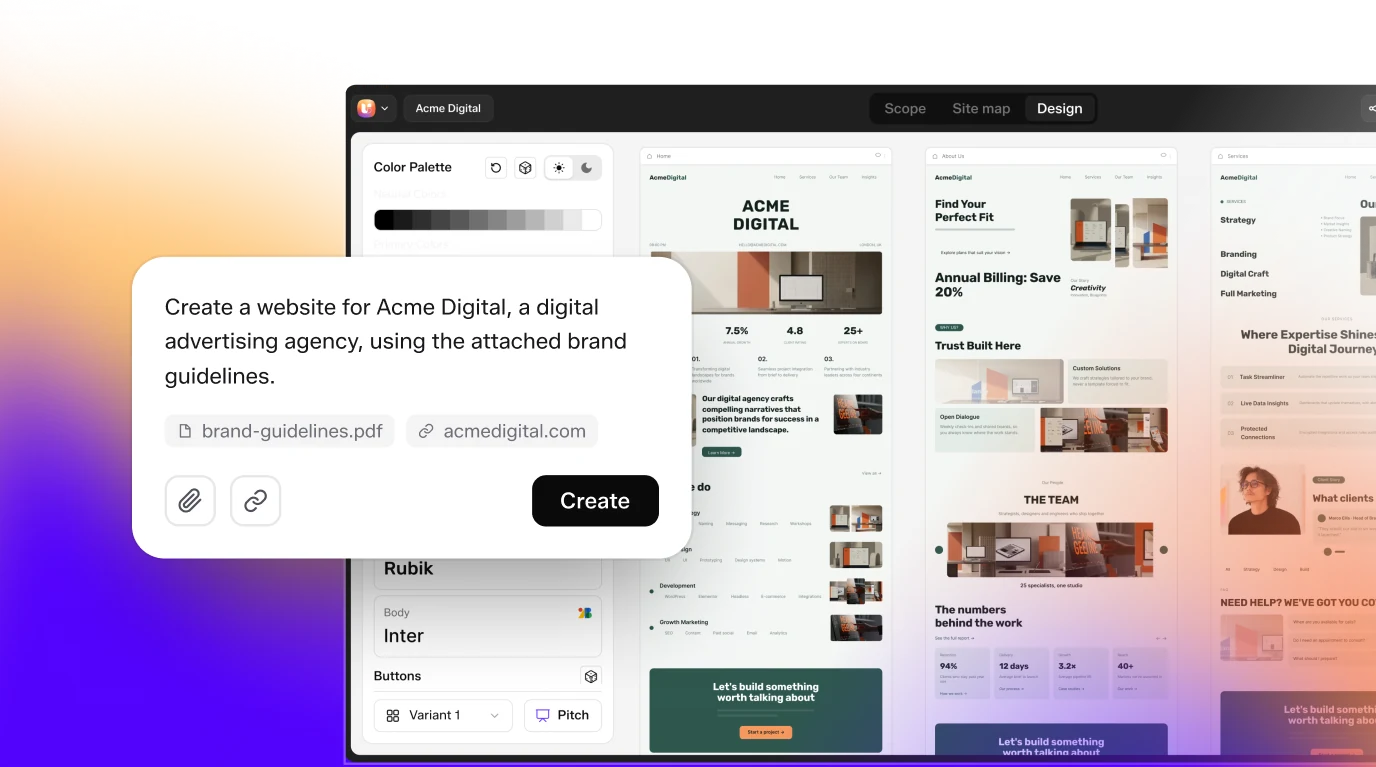
Keep colors, fonts and tone in one guidelines file, then build pages that follow it. UiChemy Composer and Figma to WordPress put the result into Elementor or Gutenberg, where those tokens can be applied. Click Get Started on uichemy.com.
How to install Brand Skill: Voice, Identity and Token Sync for AI Agents
git clone https://github.com/nextlevelbuilder/ui-ux-pro-max-skill.gitClone the repository
Run
git clone https://github.com/nextlevelbuilder/ui-ux-pro-max-skill.git. The skill is the .claude/skills/brand folder.Copy the skill folder
Copy .claude/skills/brand into the folder where your agent loads skills. The scripts, references and templates folders belong to the skill, so copy it whole. The design-system skill is the natural companion.
Check the runtime
The scripts use Node for .cjs files and Python 3 for .py files. Run
node --versionandpython3 --versionbefore asking the agent to use them.Ask for the task
Describe the job in plain words and let the agent route to the skill.
Check that it loaded
Ask the agent to run the context injection script after you fill brand-guidelines.md. It should print brand context, and a later sync should stop and report if token files already exist.
Key features
- Guidelines as source of truthdocs/brand-guidelines.md feeds scripts and token files, and the agent updates it through the update subcommand.
- Brand context injectioninject-brand-context.cjs extracts brand context for prompts and can output JSON.
- Token syncsync-brand-to-tokens.cjs writes assets/design-tokens.json and assets/design-tokens.css from the guidelines.
- Sync guardThe sync stops on existing token files, custom properties, Tailwind v4 theme variables or theme colors. A force flag replaces managed outputs from an earlier sync.
- Asset validationvalidate-asset.cjs checks asset naming, size and format.
- Color extractionextract-colors.cjs extracts colors from an image and compares them against the palette.
- Voice and messaging frameworksReference files for brand voice and messaging structure.
- Visual identity referencesColor palette management, typography specifications and logo usage rules.
- Consistency and approval checklistsA consistency checklist and an approval checklist for reviewing work against the brand.
- Starter templatetemplates/brand-guidelines-starter.md is a complete starter for a new brand.
Frequently asked questions
What is the brand skill?
It is the brand folder in nextlevelbuilder/ui-ux-pro-max-skill. It gives an AI coding agent frameworks for brand voice, identity and messaging, and Node scripts that keep a guidelines file in sync with design tokens and validate assets.
How do I install it without npx?
Clone the repository with git and copy .claude/skills/brand, including scripts, references and templates, into your agent's skills folder. The scripts are Node .cjs files, so check that Node is available.
Where does my brand data live?
In docs/brand-guidelines.md inside your project, which the skill treats as the source of truth. The sync script derives assets/design-tokens.json and assets/design-tokens.css from it, so edit the guidelines, not the generated files.
Will the token sync overwrite my tokens?
Not silently. It stops when it detects existing token files, root custom properties, Tailwind v4 theme variables or Tailwind theme colors. Review the reported source first, and use force only if the files are managed outputs you intend to replace.
How is it different from the design system skill?
This skill holds brand identity and voice and syncs it to tokens. The design system skill defines token layers, component specs and validators. Its integration notes say to extract primitives from the brand.
Does it generate logos?
No. The brand skill covers guidelines, voice, assets and consistency. Logo generation, corporate identity mockups and banners are in the umbrella design skill of the same repository. The repository README and SKILL.md linked in the sources section are the authority for details.
What license does it use?
The repository is MIT licensed. This skill's frontmatter lists no license field, so rely on the repository license. The 31K install count on this page comes from a third-party skills listing.