
What the server does
Brandsystem MCP is a local first MCP server that extracts brand identity from a website, PDF or Figma file and compiles it into a .brand directory. The directory holds DTCG tokens, voice rules and a runtime file that an agent loads before it generates. No account is required.
The package takes brand material you already have, such as a website, PDF guide, Figma library or local files, and produces a portable .brand directory. It holds design tokens, voice rules, provenance and compliance checks that agents read at generation time.
The README frames the problem as output that is correct but generic, because guidelines live in PDFs, Figma files and people's heads. Loading brand-runtime.json lets the agent start from your colors, fonts, logo and voice rules.
What lands in the .brand folder
tokens.jsonholds DTCG design tokens.brand-runtime.jsonis a single file of brand context for any AI agent.interaction-policy.jsoncarries anti-patterns, voice constraints and never-say words.DESIGN.mdis a portable design brief, andbrand-report.htmlis a visual report you can paste into an AI chat.
Four sessions, stop anywhere
- Core Identity extracts colors, fonts and logo and compiles tokens, starting with
brand_start. - Visual Identity adds composition rules and anti-patterns through
brand_deepen_identity. - Messaging defines voice, tone and never-say words with
brand_compile_messaging. - Content Strategy builds personas, journey stages and themes, starting with
brand_build_personas.
Who it suits
- Teams whose brand lives in a website, PDF or Figma library and who want agents to stop producing generic output.
- Builders who already hold brand guidelines. Related: a brand guidelines skill and a skill that creates DESIGN.md.
- Designers handing a Figma library to agents. Related: a Figma MCP server.
Skip it if
- You need the hosted Brandcode MCP today. The README says it is pre-release and open to approved clients only.
- You want WordPress pages generated from the brand. This server produces brand files, not pages.
Use it with UiChemy
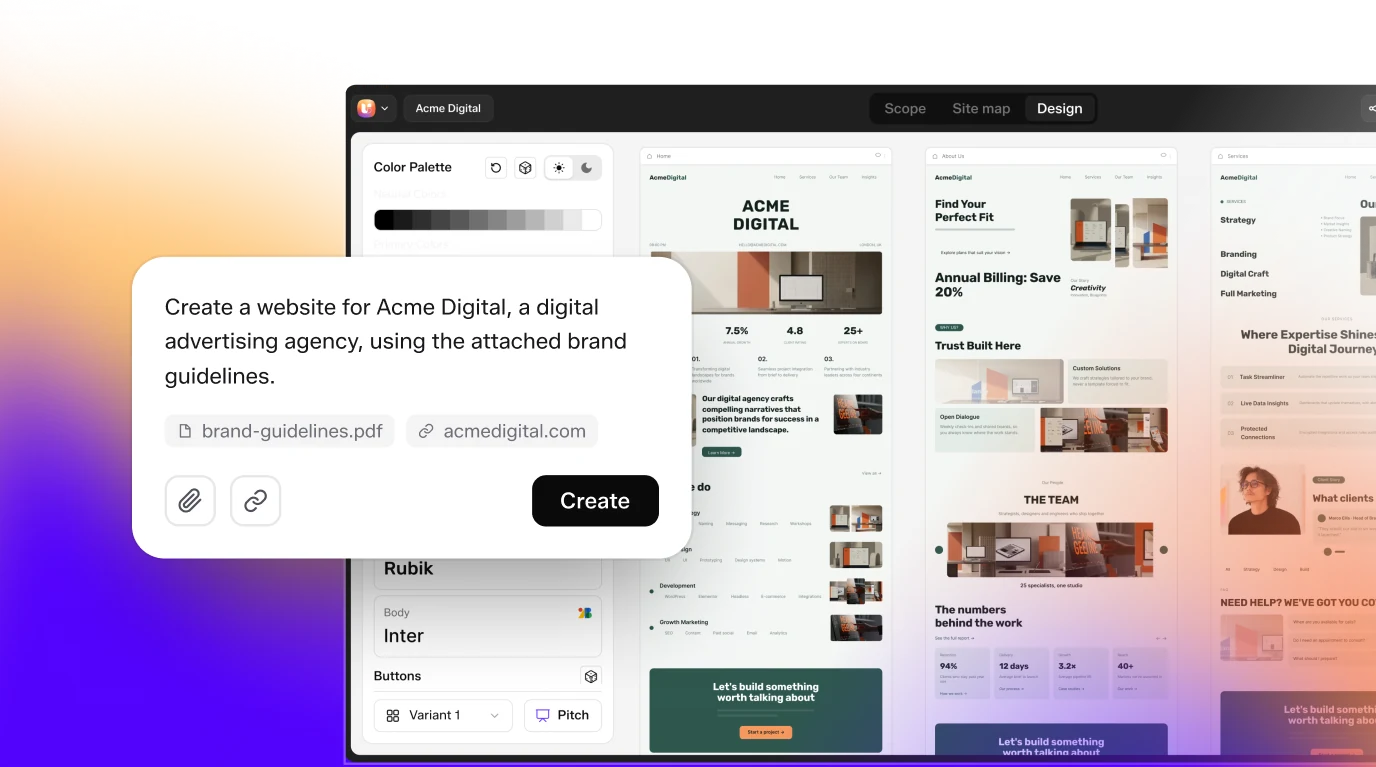
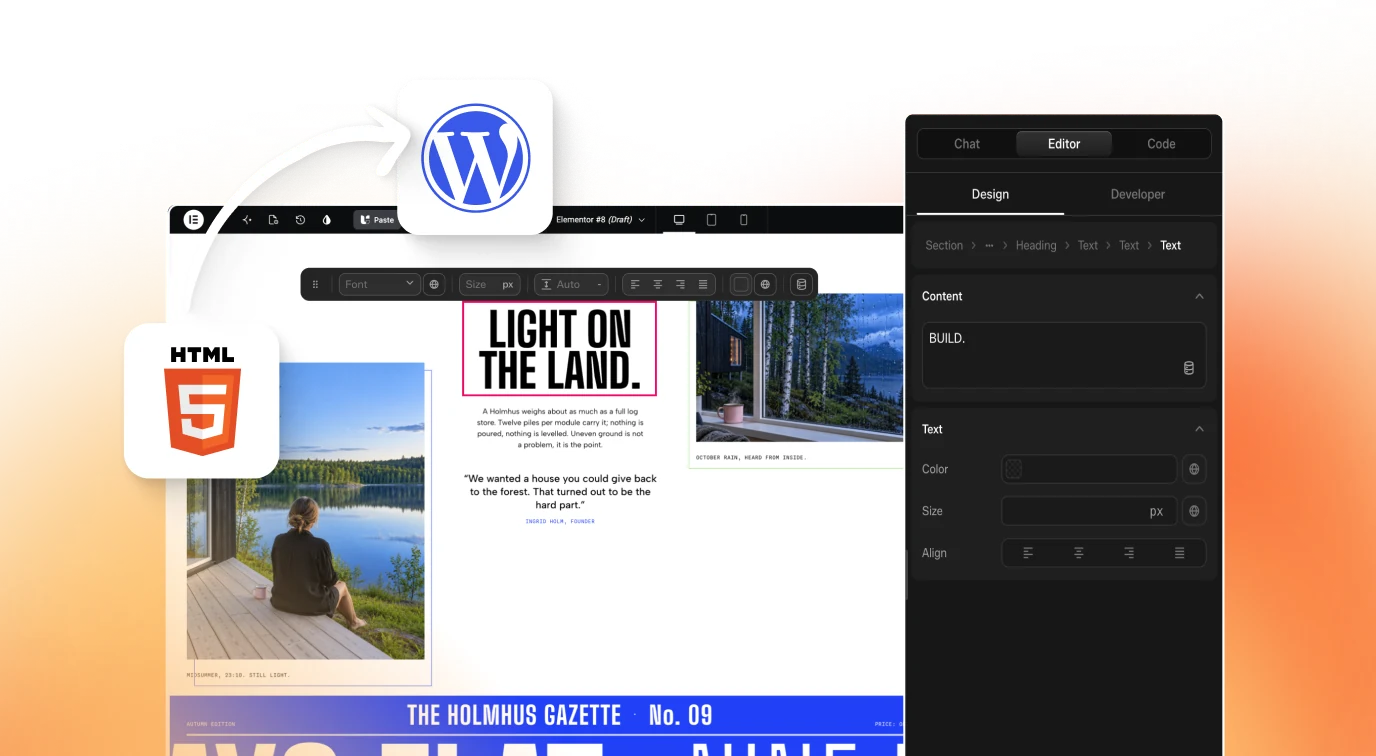
Brandsystem produces brand files and checks HTML or CSS against them, but it builds no pages. UiChemy covers that part: Figma to WordPress converts designs, and Composer edits pages as real HTML, CSS and JS inside Elementor or Gutenberg. Click Get Started on uichemy.com.
Connect Brandsystem MCP Server: Turn Brand Guidelines into a Portable .brand Runtime to your AI client
npx -y @brandsystem/mcpRun the installer
Run
npx @brandsystem/mcp install --client claude-code --writefor Claude Code. Replace claude-code with cursor, windsurf, claude-desktop, cline or codex as needed. Without --write it is a dry run.Or add the config by hand
Paste the block above into .mcp.json for Claude Code, .cursor/mcp.json for Cursor, or the Windsurf MCP settings.
Build a brand system
Ask the agent to run brand_start with a client name, a website URL and mode set to auto. The README says this extracts colors, fonts and logo, then compiles tokens in under 60 seconds.
Opt in to the full tool set
Add --profile=full to the args, or set BRANDSYSTEM_PROFILE=full, to register every authoring tool beyond the 12 core tools.
Generate on brand
Ask for content through brand_write, which needs the full profile from the step above, for example a social graphic about a launch, so the agent loads colors, typography, voice and anti-patterns.
Client configuration
{
  "mcpServers": {
    "brandsystem": {
      "command": "npx",
      "args": ["-y", "@brandsystem/mcp"]
    }
  }
}Endpoints and ports
https://github.com/Brandcode-Studio/brandsystem-mcpSource, README and installation guidehttps://brandcode.studioOptional hosted brand sync linked in the READMEWhat you can do with it
- Adopt what you already haveA website, PDF guide, Figma library, local files or a Brandcode Studio brand can all be the starting point.
- Portable runtime directoryThe .brand folder travels with the brand, so it can be versioned and committed to any repository.
- Compliance checksbrand_preflight flags off brand colors, wrong fonts and anti-pattern violations in HTML and CSS before they ship.
- Task scoped contextbrand_context returns only the runtime sections a task needs, instead of the whole brand each time.
- Core and full profilesThe default Core profile registers 12 tools for the adopt, use and check loop, and the full profile adds the whole authoring system.
- Escalating extractionAuto mode moves from a cheap pass to rendered or deeper multi page extraction when the first pass is weak.
- Local first, no accountEverything runs on your machine, and connecting to Brandcode Studio to share a brand is optional.
Tools it exposes
brand_start
Begins here. Creates a brand system from a website URL, with mode auto for one call setup.
brand_status
Checks progress and returns next steps.
brand_extract_web
Extracts logo, colors and fonts from a website URL.
brand_compile
Generates DTCG tokens, the brand runtime contract and the interaction policy from extracted data.
brand_clarify
Resolves ambiguous brand values such as color roles and font confirmations.
brand_preflight
Checks HTML and CSS against brand rules, catching off brand colors, wrong fonts and anti-pattern violations.
brand_runtime
Reads the compiled brand runtime contract.
brand_context
Selects a task scoped slice of the runtime and returns an explicit no match instead of a silent fallback.
brand_report
Generates a portable HTML brand report to upload to any AI chat.
brand_export
Generates portable brand files for chat, code, team sharing or email.
Frequently asked questions
What is Brandsystem MCP?
It is an MCP server that turns existing brand material into a portable .brand runtime. It extracts identity from a website, PDF or Figma file, then compiles design tokens, voice rules, provenance and compliance checks that an AI agent can load.
How do I install it?
Run npx @brandsystem/mcp install with a client name and the --write flag, or paste the npx -y @brandsystem/mcp block into your MCP config. The installer is a dry run unless you pass --write, so you can preview the change first.
Which AI clients can use it?
The README lists Claude Code, Claude Desktop, Cursor, Windsurf, Cline and Codex for local setup. ChatGPT and other remote first clients use the same runtime as an uploaded brand-report.html or brand-runtime.json file, or a remote MCP connection.
Do I need an account?
No. The README describes the default flow as local first with no account required. Connecting to Brandcode Studio is optional and is only needed if you want teammates to pull the same hosted brand into their tools.
How many tools does it register?
By default it registers the Core profile of 12 tools, covering adopt, runtime and context, create, check and export, plus the Studio connector entry points. The full profile registers the entire authoring system through a flag or an environment variable.
How does it differ from the hosted Brandcode MCP?
The brandsystem package builds and compiles the .brand runtime locally. The hosted Brandcode MCP serves that runtime over HTTP with authenticated reads, but the README says it is pre-release and available to approved clients only.