Your
Figma Design,
Live In
Bricks
Bring an approved Figma frame and UiChemy stands it up in Bricks as real elements you can open, drag, and restyle, matched to the layout you drew and responsive on every screen. The work stays yours in native Bricks, so you stay the designer, not the one retyping it.

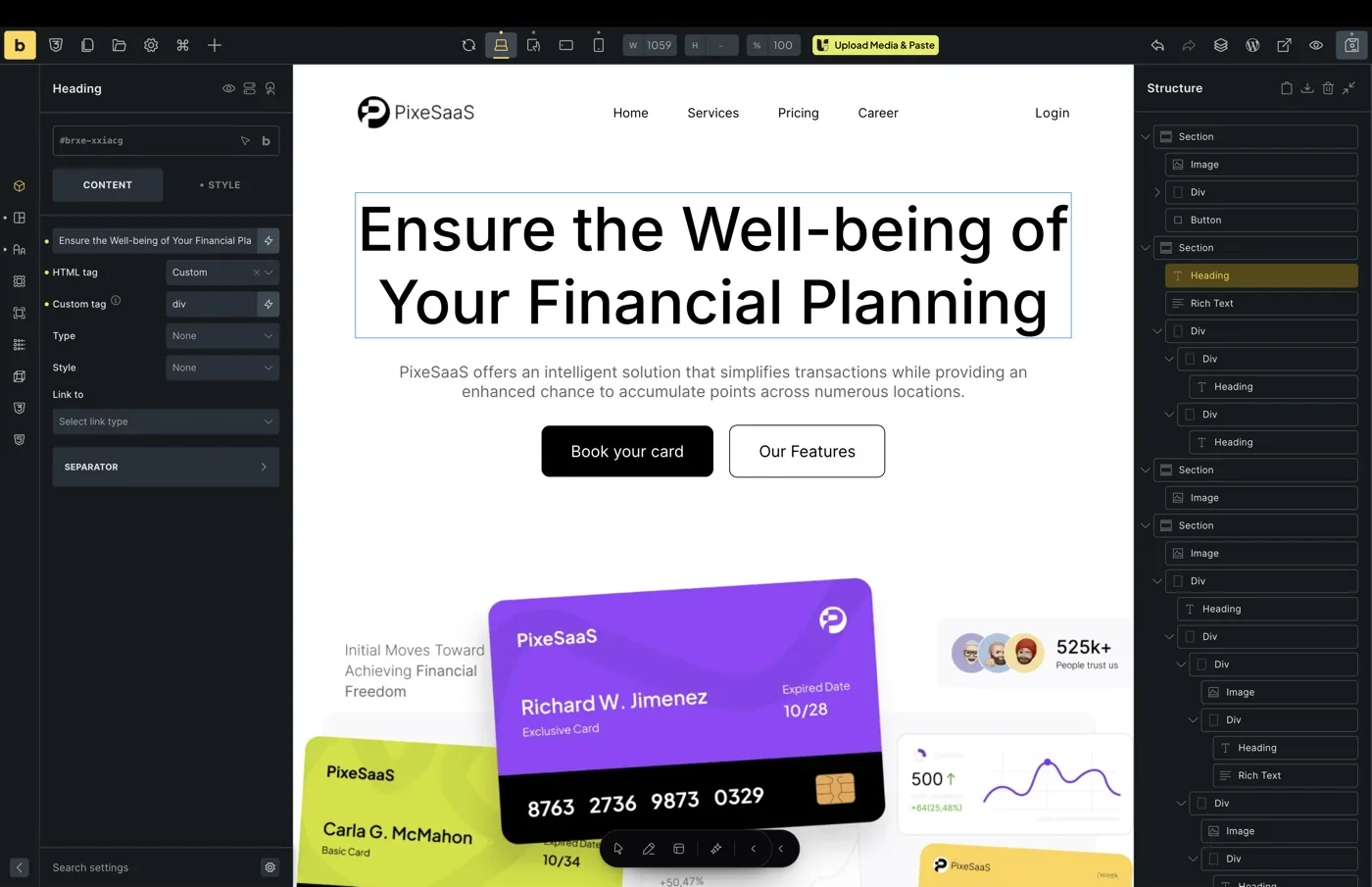
Real Bricks Elements You Can Open And Restyle
Each section is a real Bricks element you drag and restyle, colors and type dropped into Bricks globals.
- →Native Bricks elements, fully editable in the Bricks builder.
- →Not exported HTML, not a flat image. A real, native page.
- →95% responsive across desktop, tablet, and mobile breakpoints.
- →Global colors and typography synced into Bricks as reusable classes.
Real output, not a flat export
See The Same Frame Live In Bricks
Your Figma frame on the left, the live Bricks page on the right. Every section is a native Bricks element you can open, drag, and restyle, never a screenshot or locked code.
Your approved frame, exactly as you drew it
- Tag any layer to the element you want it to become
- Auto layout frames, the structure you already built
- Your header and footer frames, not just the page
The same design, now a real editable Bricks page
- Bricks elements, exactly the ones you tagged
- Manual responsive manager to tune every breakpoint
- Header and footer sent to the theme builder
From Figma Frame To A Live
Bricks Page In Six Steps
Start With Your Approved Design
Choose the Figma frame you want on the page.
Prep Layers And Compress Media
Handle media your way, automatic or by hand.
Widget Tagging And Auto Layout
Map each layer to a Bricks element, then set auto layout and responsive behavior across breakpoints.
Connect Your Site, Sync Globals
Link your WordPress site and bring your global color, type, and spacing across.
Check Your Settings, Then Convert
Check your conversion settings, then run the convert.
Preview The Page, Then Publish
Open the live page and check it before it goes public.
Start With Your Approved Design
Choose the Figma frame you want on the page.
Prep Layers And Compress Media
Handle media your way, automatic or by hand.
Widget Tagging And Auto Layout
Map each layer to a Bricks element, then set auto layout and responsive behavior across breakpoints.
Connect Your Site, Sync Globals
Link your WordPress site and bring your global color, type, and spacing across.
Check Your Settings, Then Convert
Check your conversion settings, then run the convert.
Preview The Page, Then Publish
Open the live page and check it before it goes public.
Steer Every Pixel Or Let AI Build It
Classic Mode maps every Figma layer to Bricks by hand for pixel-exact control. AI Express automates the whole conversion, live on Elementor now with Bricks next.


Classic Mode For Pixel-Exact Control
Tag your layers to Bricks elements yourself for pixel control, across Elementor, Gutenberg, and Bricks today.
Explore Classic Mode


AI Express Mode Builds It For You
UiChemy reads your frame and builds the whole page for you to review. On Elementor today, Bricks next.
See AI Express on ElementorFinished designs, not redos
90,000+ Designers Trust UiChemy And Rate It 4.9 Out Of 5
Designers finish inside WordPress instead of rebuilding, with 1,300+ templates ready for a head start.
Figma To Bricks, Answered
Yes. UiChemy converts your Figma design into native Bricks elements on current Bricks versions, and the output opens and edits directly in the Bricks builder.
Real Bricks elements. Every section comes in as a native element you can drag, restyle, and rewrite, never a flat image or read-only code.
Both. Convert one section for a quick block, or a full Figma frame into a complete Bricks page in a single pass.
Design in Figma, then push to your Bricks site with the plugin or a template JSON. Our docs cover setup.
No. AI Express Mode needs zero code, and code editing is there only if you want it.
Colors, type, spacing, and motion carry over, layout holds across breakpoints, and the fixer logs every change.
Everything comes in as native widgets, blocks, or elements you can restyle, rearrange, and rewrite, never a flat image or locked code.
Bricks and WordPress on your site, the UiChemy WordPress plugin, and the UiChemy Figma plugin. You connect the two with one Connection Link.
Generate a Connection Link in your UiChemy dashboard, paste it into the Figma plugin, then Direct Import pushes the design straight to your Bricks site, or copy and paste it in.
You generate one Connection Link in your UiChemy dashboard and paste it into the Figma plugin. That is the whole setup.
Works on most WordPress hosts. If Wordfence or a managed host blocks it, our docs and support get you connected.
Yes. Local and staging sites connect the same way, with a Connection Link.
Classic Mode Bricks conversions cost almost nothing per convert, and your Credit pool refills every month. You only spend Credits on conversions that complete.
Yes. The UiChemy WordPress plugin is free to download, and Classic Mode lets you run real Bricks conversions so you can see the output before upgrading.
Yes. Everything you convert lives on your own WordPress site and stays yours whether or not you keep the plan.
One unit per conversion. AI Express costs more Credits, Classic almost nothing, and your pool refills every month.
No. Credits are spent on completed conversions, so a failed attempt does not drain your balance.
AI Express Mode is live on Elementor today and coming to Bricks next. For Bricks right now, use Classic Mode, which gives you pixel control over the conversion.
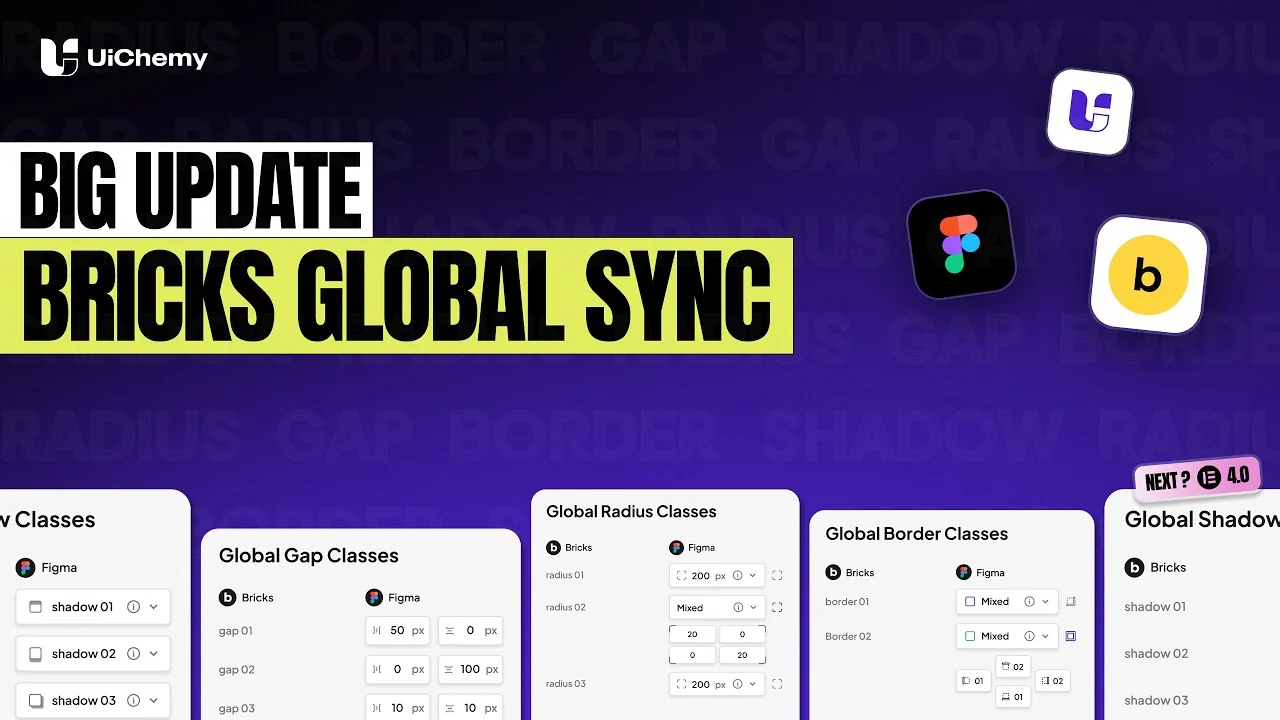
Yes. Colors and typography drop into Bricks globals as reusable classes, so a brand change updates site-wide instead of element by element.
UiChemy supports Bricks, Elementor, and Gutenberg. You tag your Figma design once and convert it into the builder your site runs on.
Yes, into Bricks globals and responsive spacing.
Both. One runs in Figma to read your design, one runs in WordPress to build it.
Direct Import pushes to a connected Bricks site; Copy to Clipboard pastes in; Express Mode is fastest.