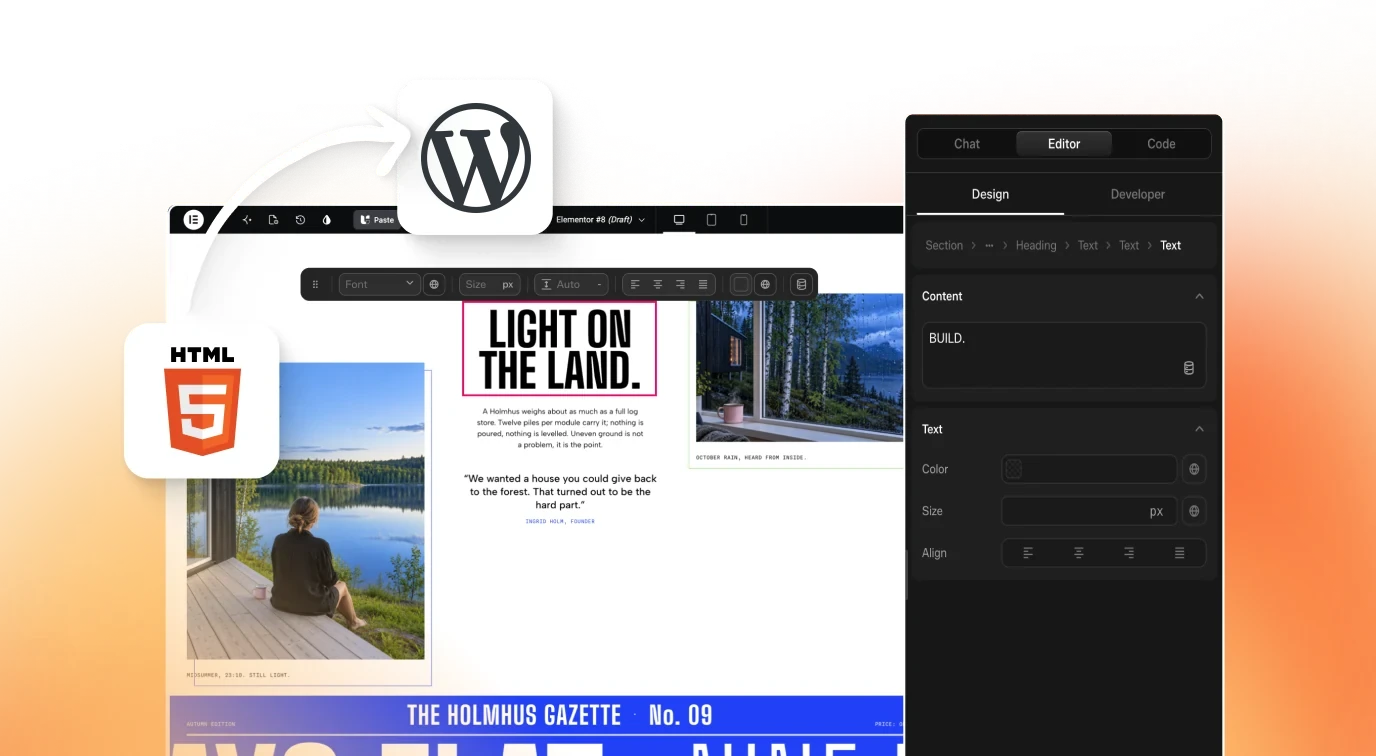
Export Figma to Elementor Without Code
 Sagar Patel
Quick answer: you can export a Figma design to Elementor without writing code by using UiChemy. Run the Figma plugin, then either use Direct Import to create a draft page on your connected site or use Copy to Clipboard and paste into the Elementor editor. Prepare and lock your design first.
This guide covers both export routes, the setup, the design prep that decides the result, and what to check afterwards. Every product detail comes from the UiChemy product page, pricing page and docs, read on 13 November 2026.
What UiChemy Does
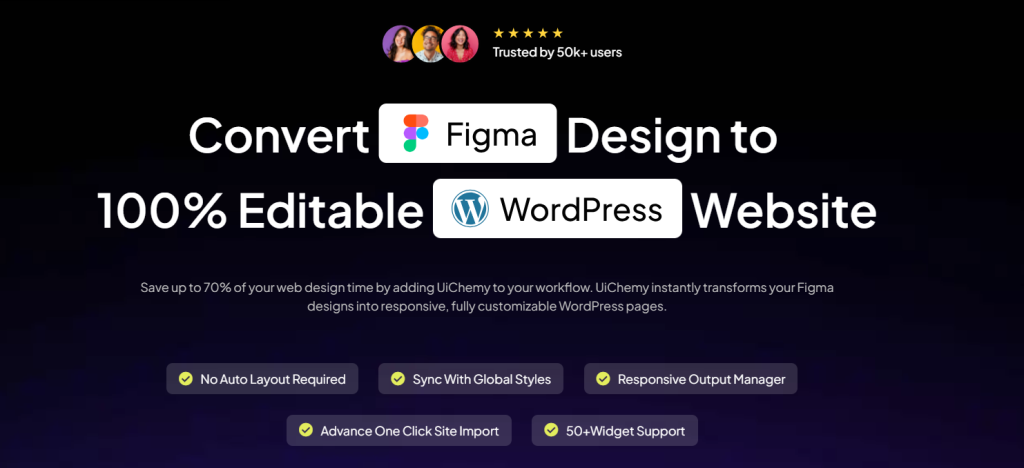
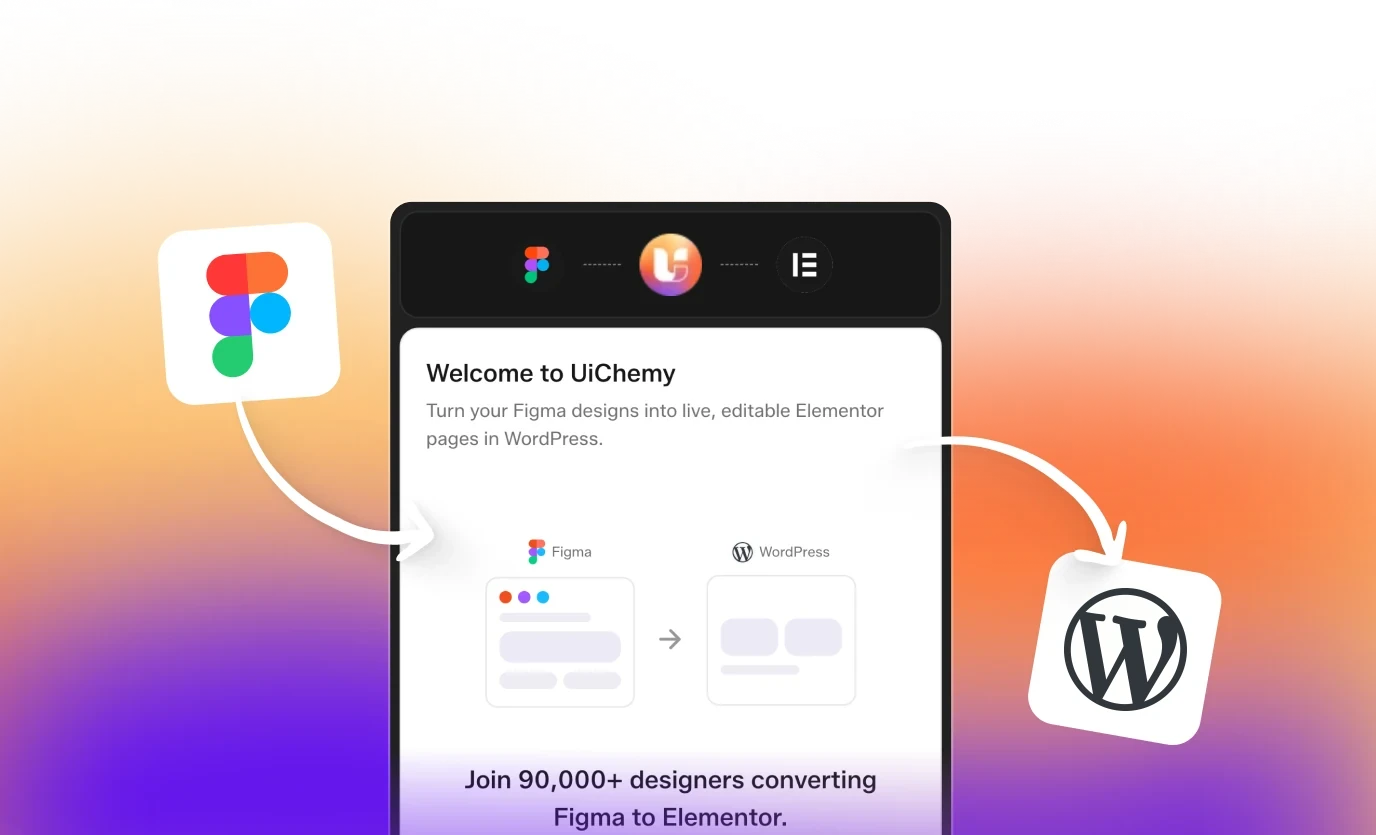
UiChemy converts Figma designs into WordPress pages built with native Elementor widgets. The product page says any Figma file works and there is no code to untangle. It has two modes: AI Express Mode, which reads the frame and builds the page, and Classic Mode, where you tag each layer for pixel level control. The same file can also convert to Gutenberg or Bricks.
Direct Import or Copy to Clipboard
The export guide in the UiChemy docs lists two routes. Pick by the size of what you are moving.
| Route | What happens | Best for | Limits |
|---|---|---|---|
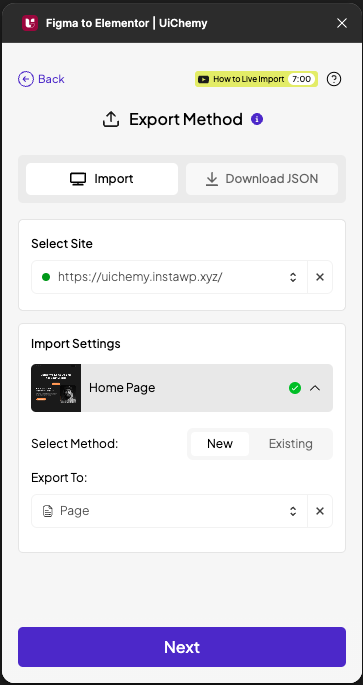
| Direct Import | The page is created as a draft on your connected WordPress site, ready to open in Elementor | Complete page layouts | Needs a connected site; multi page exports require it |
| Copy to Clipboard | You run the same conversion, open the target page in Elementor, then right click and choose Paste from other site, or press Ctrl+V | A single section or a small block | You paste section by section |
How to Export Figma to Elementor Step by Step
- Install the UiChemy plugin for Figma from the plugin library or from the install guide.
- Install the UiChemy WordPress plugin on your site and generate a Connection Link in your UiChemy dashboard, then paste it into the Figma plugin.
- Optimize the design: complete the Optimize Multi-Layer Media and Optimize Your Design steps, and lock media. Lock only the layers you need, and do not lock elements you plan to tag yourself.
- Choose Classic Mode and follow the Step by Step Method (the docs describe an 8 step wizard), or choose AI Express Mode for a no tagging run.
- Export with Direct Import, or Copy to Clipboard for a single section.
- Open the result in Elementor, review it and publish.
The product page notes that conversions work on free Elementor, and that Pro widgets are used only where Elementor Pro is installed. Some hosts or security plugins such as Wordfence can block the connection, and the docs and support can help.
Three Ways to Start a Design
1. Design from scratch
Follow the UiChemy documentation on auto layout, typography and widget tagging so each element maps to the right Elementor widget.
2. Start from a UiChemy template
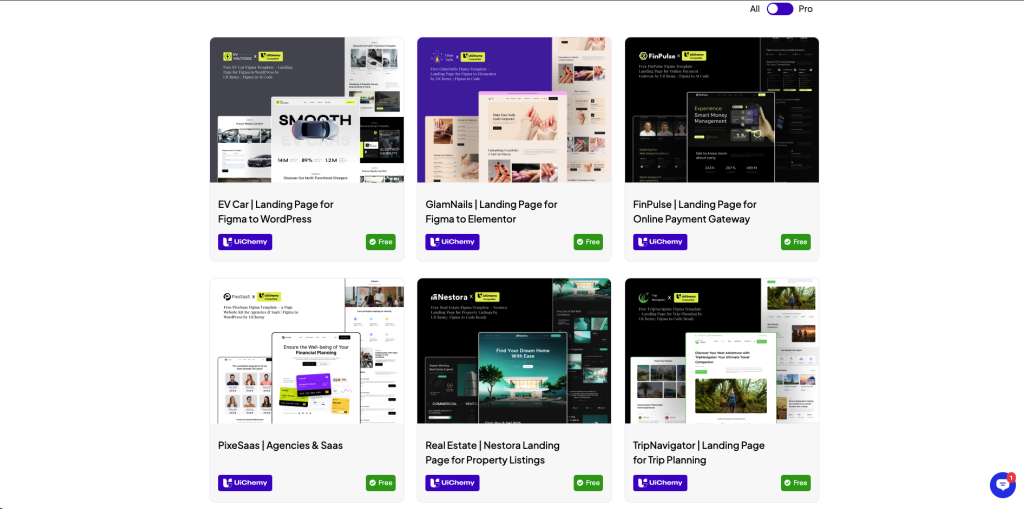
Classic Mode includes quick layouts with predefined widget tagging, so you can customize a structured layout and convert it.
3. Convert a Figma template you already have
If you found a Figma layout you like, bring it into your file, optimize it as above and convert it into an editable Elementor page.
Design Prep Checklist Before You Export
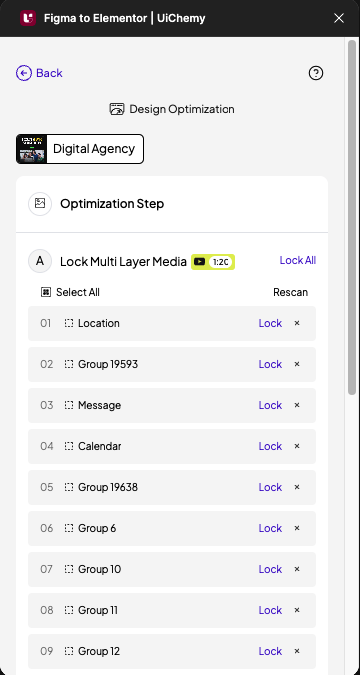
- Keep the layer structure organized and use auto layout where it helps; the product page says auto layout is not required.
- Lock multi layer vectors and images so they export as single images.
- Use the Widget Tag feature in Classic Mode to map layouts to Elementor widgets such as galleries or videos.
- Check every locked layer: locked media is exported as an image.
- Expect small spacing or alignment tweaks in Elementor after import.
What This Means If You Build WordPress Sites
A prepared Figma file becomes an editable Elementor page that your team can maintain inside WordPress, with no hand coding. Compare the full workflow in the Figma to Elementor guide, see how Claude and UiChemy MCP export a design, and read the Figma to WordPress guide. For the story of the first release see Introducing UiChemy.
Frequently Asked Questions
Can I export Figma to Elementor without coding?
Yes. UiChemy converts the design into native Elementor widgets, and you import it with Direct Import or Copy to Clipboard. No hand coding is needed.
What is the difference between Direct Import and Copy to Clipboard?
Direct Import creates a draft page on your connected WordPress site and suits full pages. Copy to Clipboard lets you paste one section into the Elementor editor.
Does it work with the free version of Elementor?
The UiChemy product page says conversions work on free Elementor, and Pro widgets are used only where Pro is installed.
Which builders does Classic Mode support?
The docs list Elementor, Gutenberg and Bricks Builder. Divi, WPBakery and Beaver Builder are not supported.
Is there a free plan?
The pricing page lists a Free plan at $0 with 1,000 credits a month, read on 13 November 2026. Check the page for current terms.
Sources read on 13 November 2026: uichemy.com/figma-to-elementor, the export guide and uichemy.com/pricing.