
Figma Desktop vs Browser for Heavy Web Files
 Sagar Patel
A marketing homepage in Figma, eleven sections, four breakpoints, a component library with 340 variants and about sixty placed photographs.
Somewhere around the third round of client changes the file starts taking twenty seconds to pan, and then a red tile appears in the left sidebar telling you memory is at 92 percent.
The advice you will get is to switch to the Figma desktop app. It is reasonable advice and it is only half true, in a way that matters enough to write down properly.
Here is what the desktop app actually changes for heavy web files, what it does not, and what to do at each memory threshold before the file locks.
Every number below comes from Figma’s own help centre and downloads page, re-read on 8 September 2026.
The 2GB Ceiling Applies to Both
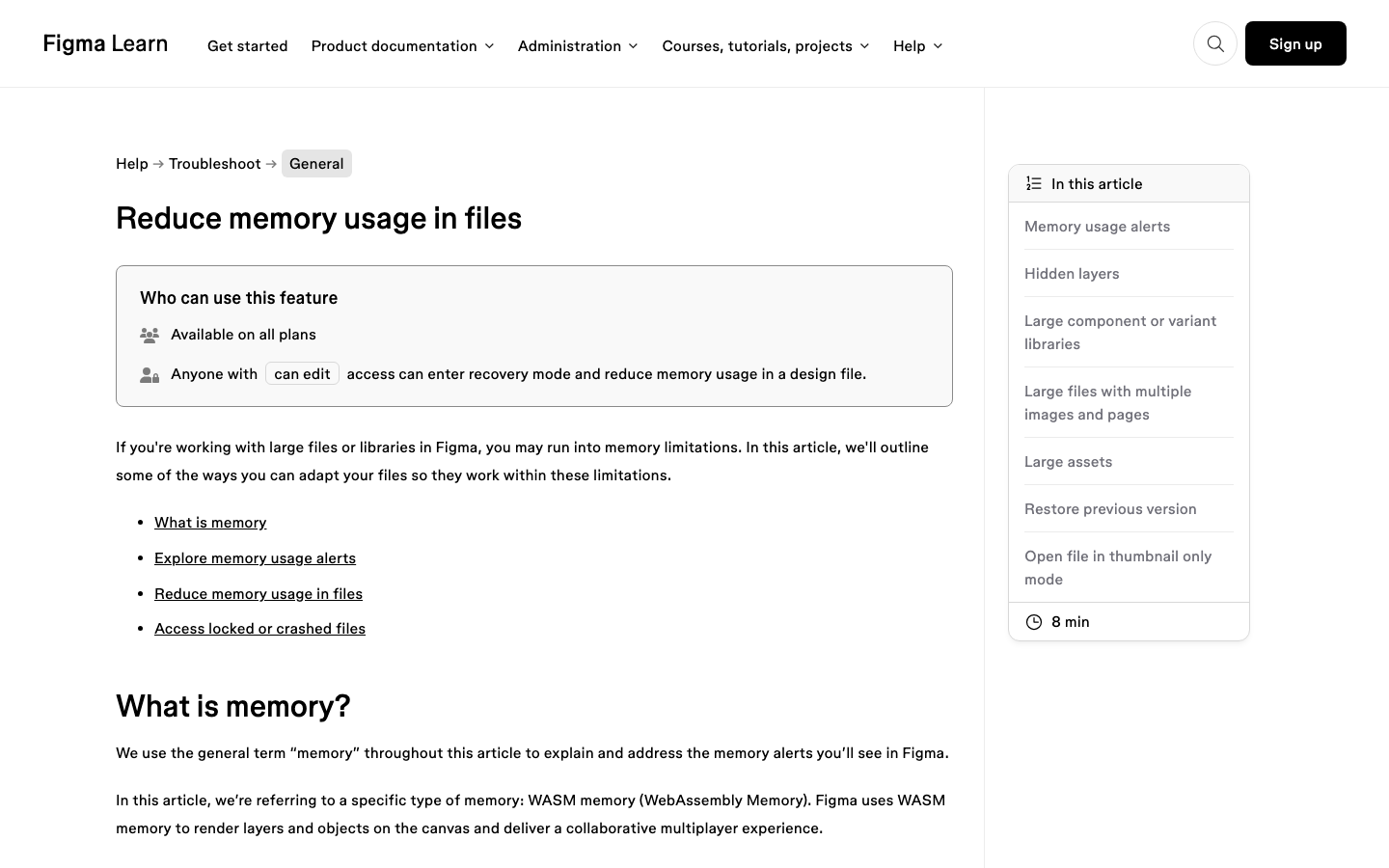
Start here, because it corrects the most common assumption. Figma renders the canvas using WASM memory, and every browser has its own active memory limit.
Figma’s general figure is an active memory limit of 2GB per browser tab.
Figma then says the thing people miss. Because Figma is built on browser-based technologies, those limitations apply even when you are using the desktop applications.
Installing the desktop app does not hand a heavy file more headroom.
What the desktop app removes is competition for that headroom. A browser window with nineteen other tabs, three extensions and a video call is spending memory and GPU that your file wanted.
The desktop app is a cleaner room, not a bigger one.
What the Desktop App Actually Adds
Figma’s own line is that the desktop app gives you the same features and functionality as the browser, plus two things: developing plugins and widgets, and using fonts installed on your device without the font installer.
In practice the file-handling differences are what change a working day on a large project.
| Capability | Browser | Desktop app |
|---|---|---|
| Active memory limit | About 2GB per tab | The same limit applies |
| Local fonts | Needs the font installer | Reads installed fonts directly |
| Building plugins and widgets | No | Yes, with a local development environment |
| Tab groups, pinning and muting | Browser tabs only | Native, with named and coloured tab groups |
| Split tab view | No | Two files, or the same file twice, in one window |
| Multiple windows | Browser windows | Drag a tab out, and drag tabs between windows |
| Desktop notifications | No | Menu Bar on Mac, System Tray on Windows |
| Agent chat in its own window | No | Yes, added 26 August 2026 on macOS and Windows |
| Trackpad haptics | No | macOS only, with Force Click enabled in system settings |
| Recovery mode on a locked file | Only on supported browser versions | Offered as the fallback when the browser is unsupported |
Two of those are underrated on web work. Split tab view on a single file lets you keep the desktop frame and the mobile frame both visible while you reconcile them, which beats zooming between two ends of the canvas.
And the agent chat panel in its own window, added on 26 August 2026, means the panel is not eating canvas width on a 1440px design.
System Requirements Nobody Checks Until Something Breaks
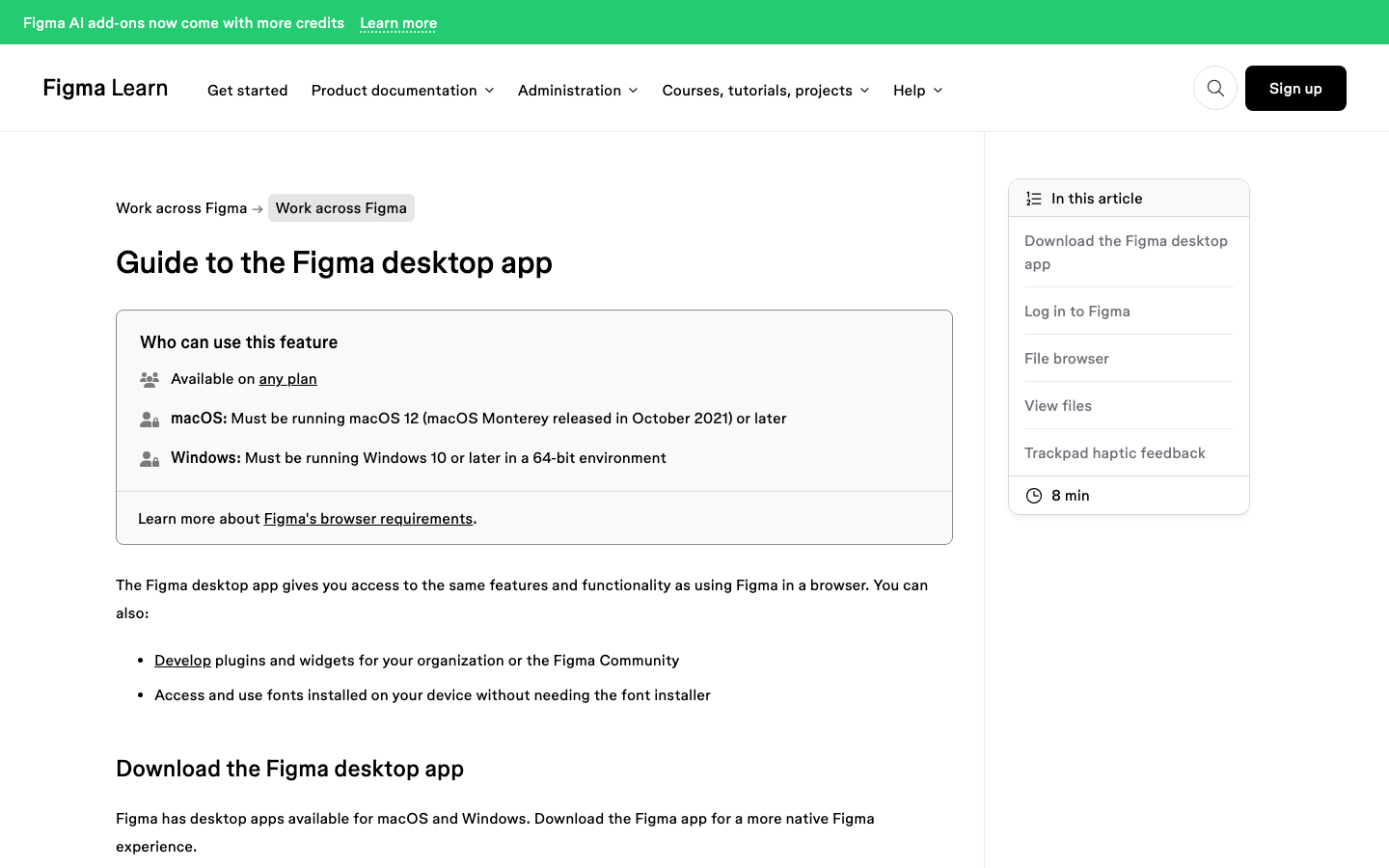
- macOS 12 or later, released October 2021. Optimised for both Intel and Apple Silicon.
- Windows 10 or later, and it must be a 64-bit environment. Figma is not supported on 32-bit.
- Support for previous desktop versions is removed six months after release, so a machine managed by IT can quietly fall out of support.
- WebGL must be enabled. A Chrome extension can block it even when the browser supports it.
- Figma supports stable browser releases only. Developer, early access and beta browser builds are not supported.
- Figma cannot be accessed through a VPN or proxy unless Figma is added to the safe list.
There is also a beta desktop app, installable alongside the regular one, and you do not need to be signed into the same account on both. Figma is explicit that the beta build does not give you unreleased features.
It is for testing bug fixes and performance work, nothing more.
Reading the Memory Meter Before It Locks You Out
Most designers meet the memory system at the point of failure. It is visible on demand, and turning it on early is the single highest-value habit on this list.
- Open the Main menu and hover over View.
- Select Memory usage. A meter appears in the left sidebar.
- Click Manage memory.
- In the modal, toggle Show memory in layers panel so each layer and component reports what it costs.
- Read the Memory-reduction tips in the same modal while you are there.
One caveat worth carrying: memory is only tracked for pages that have loaded. Figma loads pages and layers as needed, so opening a page you have not visited can push the number up several points at once.
The meter is a measure of what is loaded, not of what the file contains.
The Thresholds Figma’s Own Docs Disagree On
This is a genuine inconsistency and it is better to know about it than to be surprised by it. Two Figma help articles describe different alert thresholds.
| Source article | Thresholds it states | What happens |
|---|---|---|
| Reduce memory usage in files | 90 percent, then 100 percent | Red alert tile that cannot be dismissed, then the file locks |
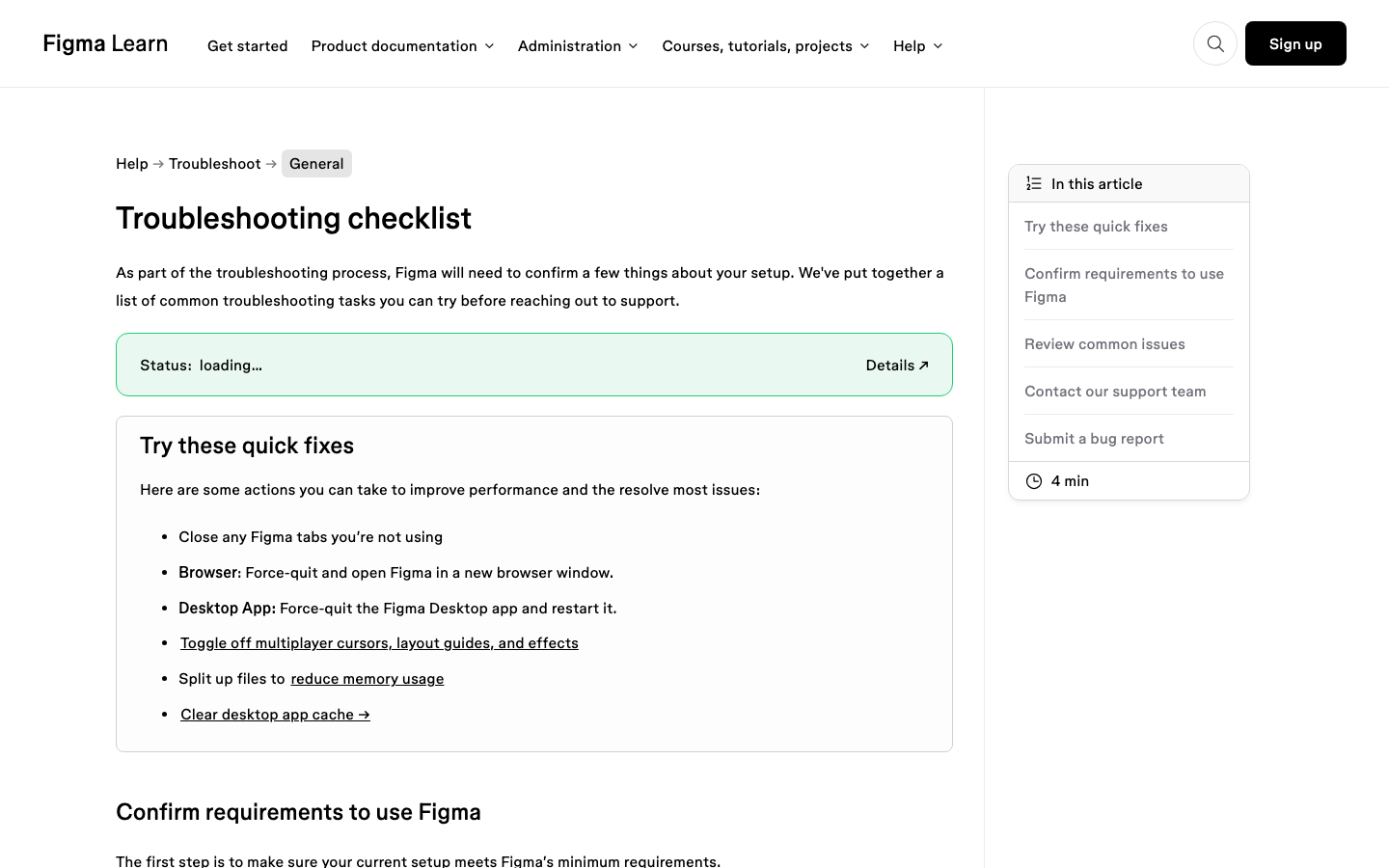
| Troubleshooting checklist | 60 percent, 75 percent, then 100 percent | Banners and alerts, then the file locks |
Figma also warns that you may not see the alerts in order, and that if usage climbs quickly you may get no alert at all. Treat any warning as the last one you will receive.
Plan your file so you are never near the number, rather than reacting to a tile.
What Actually Consumes the Memory
| Cause | Why it costs | The fix Figma recommends |
|---|---|---|
| Hidden layers | Figma stores and renders information about them even when invisible | Delete them, or use boolean component properties to toggle visibility with fewer variants |
| Large variant sets | Figma loads every component in a component set so you can switch instantly | Replace variants with component properties, then split the library if it is still heavy |
| Many high-resolution images | Rendered on the canvas, and a browser-level crash here shows no banner at all | Compress before placing. Figma names the Downsize plugin for compressing images already on the canvas |
| Complex vectors | Point-heavy paths and large SVG imports | Import complex SVGs in smaller parts |
| Too many pages in one file | Navigating to a page loads its remaining content | Create a new file per page, moving contents with select all, copy and paste |
That last footnote explains the failure that confuses people most. A white screen with no warning is usually image memory, and in that state you cannot reach the file or its version history.
Recovering a File That Has Already Locked
At 100 percent Figma locks the file. There are three documented routes back, in the order worth trying them.
Recovery mode. With edit access on a supported browser version, Figma offers recovery mode. All pages load, the manage memory modal opens, and you must get usage below 90 percent to exit.
The file reloads when you do. Supported versions are Firefox 89 and above, Chrome 83 and above, Safari 15.2 and above, and Microsoft Edge 93 and above.
If your browser is older, Figma tells you to update it or open the file in the desktop app. That is the one moment where the desktop app is a genuine rescue rather than a preference.
Thumbnail-only mode. Add ?thumbnails-only=1 to the end of the file URL to load it with low-resolution images. If the link already carries a parameter such as a node id, use &thumbnails-only=1 instead.
This is the route for a file that crashed on image memory.
Restore a lighter version. From the folder that holds the file, hold Shift, Control and Option on Mac, or Alt and Shift on Windows, click the file, choose Restore from version, and pick a version that used less memory. This works from the file browser even when the file itself will not open.
Which One to Use for a File You Plan to Convert
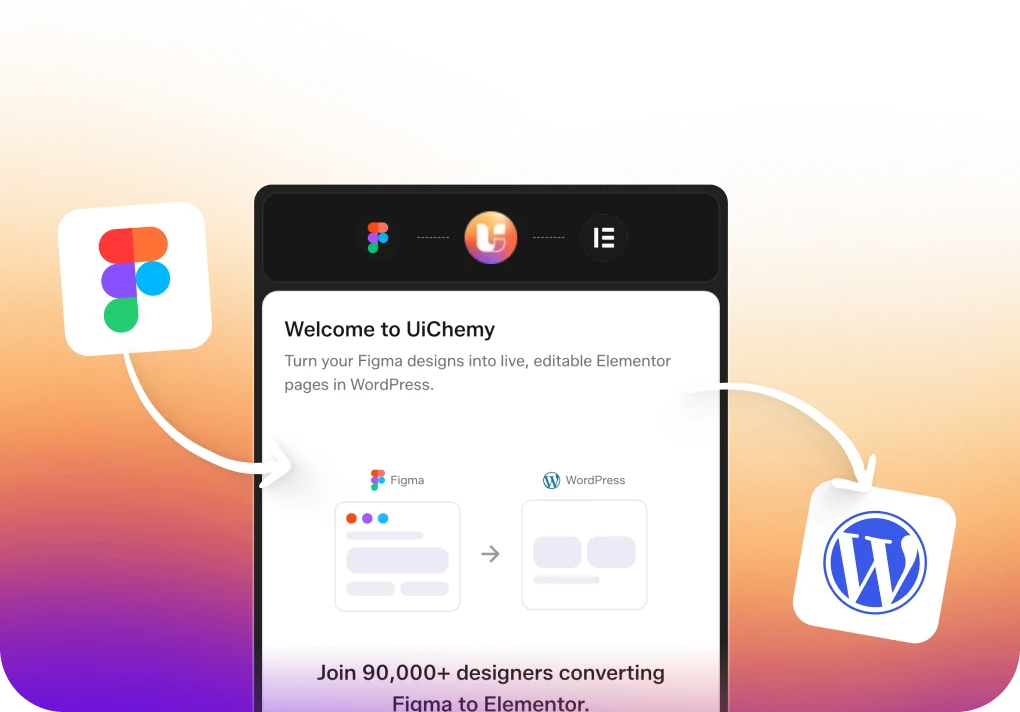
If the Figma file is part of a web design workflow that ends in a WordPress page rather than a spec, the recommendation gets simple. Use the desktop app, and cut the file down before you convert anything.
The reasons overlap almost perfectly with the memory advice above.
UiChemy’s optimisation guide asks you to delete hidden layers and empty frames, compress every placed image to its display size, and keep the design under 12,000px tall, because past that height the upload does not go through at all.
Those are the same three moves that pull a file back from 92 percent. That list also sits inside the structural rules that decide whether a design converts at all.
The connection matters too. A live import holds a connection to your site until it finishes, so a conversion started on hotel wifi is a conversion with missing images.
For a design that is genuinely too tall, the documented answer is to split it and send a section at a time with the Copy to Clipboard method, which is one of the routes covered in the current Figma to WordPress workflow.
Once the file is clean, Classic Mode covers Elementor, Gutenberg and Bricks, plus Elementor v4 Atomic, Nexter Blocks, GenerateBlocks, Spectra and Kadence, while AI Express Mode converts to Elementor today with Gutenberg and Bricks not yet released.
Both modes are on every plan, including the $0 Free tier with its 1,000 monthly credits and one Figma seat. Plans and credit allowances are on the pricing page.
One thing worth knowing if the heavy file is the reason you are reading this: the Figma frame is no longer the only way into UiChemy.
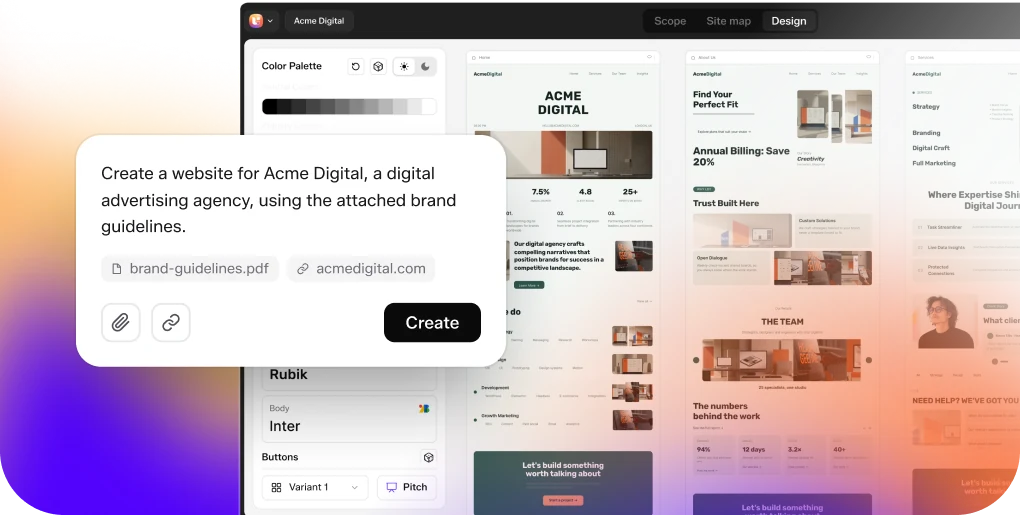
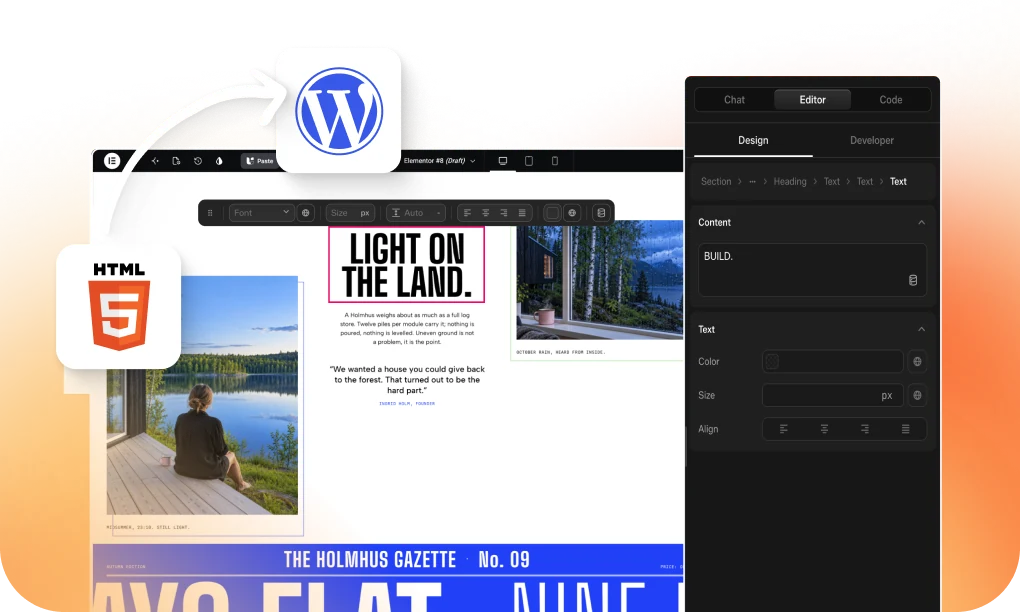
AI Website Creator starts from a text prompt or a client brief and produces a sitemap and pages, and UiChemy Composer builds sections as real HTML, CSS and JavaScript inside Elementor.
On a project where the Figma file has become the bottleneck rather than the asset, that is a genuine escape hatch rather than a consolation prize.
Where This Advice Runs Out
The desktop app is not a performance product. It removes browser competition and adds file-handling tools, and Figma states the memory limit is identical.
Anyone telling you the app fixes a heavy file is describing a side effect and calling it a feature.
There is also no offline mode. Figma lists a handful of activities that work offline and says plainly that there is no dedicated offline version, so an unreliable connection produces slow loads, low-resolution images and lag while panning regardless of which one you run.
And Figma is honest that there is no target number to design under. Its own words are that there is no specific number of layers, data or resources to look out for, and no single approach to reducing memory.
The practical version is to watch the meter on any file you expect to grow, and to split earlier than feels necessary.
Questions People Ask About the Figma Desktop App
Is the Figma desktop app faster than the browser?
It can feel faster because it is not sharing memory and GPU with other tabs and extensions. The underlying limit is the same, since Figma applies the roughly 2GB active memory ceiling to the desktop apps as well.
Does the desktop app work offline?
No. Figma has no dedicated offline version or mode.
A small set of activities work without a connection, but a file that is not cached will not open.
Why do my fonts show up in the desktop app but not the browser?
The desktop app reads fonts installed on your device directly. In a browser you need the font installer, FigmaAgent, which runs quietly in the background and makes local fonts available to Figma.
My file is locked at 100 percent memory. Have I lost the work?
Usually not. Try reloading first, then recovery mode if you have edit access and a supported browser version.
If the screen is white, use the thumbnails-only URL parameter, and if nothing opens, restore an earlier version from the file browser.
Should I split a large web design file into several files?
Yes, and earlier than you think. Figma’s documented approach is one new file per page, using select all, copy, paste into the new file, then deleting the page from the original.
Published components can be moved between files without breaking links to their instances.
The Practical Answer
Run the desktop app for daily web work, because the tab handling and the local fonts are worth it and the clean room helps. Turn the memory meter on today rather than at 92 percent.
Split before the file forces you to.
Then remember that the file you keep light is also the file that converts cleanly. The two problems have the same fix, which is a rare piece of luck in this job.
And if the file has already gone past saving, starting the page from a brief instead of from that frame is a legitimate answer rather than an admission of defeat.
Primary sources fetched on 7 September 2026: Reduce memory usage in files, Guide to the Figma desktop app, and Figma’s troubleshooting checklist.